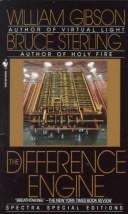
Cover of The Difference Engine

The Difference Engine

William Gibson and Bruce Sterling

4 ideas

  1. Mallory's Punch Cards and the Great Stink

    At the 1855 Derby, palaeontologist Edward 'Leviathan' Mallory rescues a drunk Ada Byron from harassment, and she entrusts him with a box of engine punch cards. Possession of those cards drags him into a violent conspiracy that climaxes during the Great Stink, when a heatwave and toxic miasma paralyse London and radical Luddite insurgents briefly take control of the streets. The episode shows how a single portable information artefact becomes a target for spies, criminals and the state once information is the core source of power.

  2. Early technology redraws class, not just industry

    Byron's Industrial Radical Party makes scientists and engineers ('savants') a new peerage, and engine programmers ('clackers') become a skilled caste, while the Luddite artisans who resisted are hunted down or erased. Applied elsewhere, this lens tracks which occupational groups a new technology elevates into an elite and which it criminalises.

  3. Identity as an entry in the state engine

    In this Britain, citizens are numbered and profiled in government engine records held by a central statistics bureau, so who you are legally is whatever the machine file says. Mass data collection shifts power from those who act to those who can edit records.

  4. The Modus: self-referential computation

    The contested cards contain Ada's 'Modus', a program that was nominally a gambling system but actually encodes a proof about the limits of formal systems, making it valuable to anyone who controls computation. The book ends in a 1991 London where the engine network begins to observe and represent itself, suggesting that a sufficiently dense information system eventually turns its processing inward and becomes aware of itself.

Save and mark ideas in the app