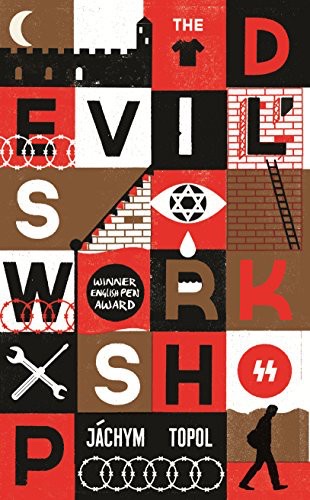
Cover of The Devil's Workshop

The Devil's Workshop

Jáchym Topol

4 ideas

  1. Terezín native sells the ghetto, then Belarus

    The success draws Belarusian activists who invite him to Minsk, where they plan a far more extreme museum of their country's largely forgotten wartime massacres, in which the burning of villages and the killing of a large share of the population would be made physically experienced. The project ends in violence and state repression.

  2. Memory survives only by being marketed

    The novel argues that an atrocity site stays preserved only when it generates attention, visitors, and money, so the people who guard remembrance are pushed into selling it. Commemoration and commodification become the same act: the gift shop, the guided tour, and the youth hostel are what keep the ghetto from becoming a parking lot, and they also hollow out what they protect.

  3. Hierarchy of remembered and forgotten dead

    Public memory is a competitive market: Western-recognized sites like Terezín collect pilgrims, funding, and meaning, while mass killings in places like Belarus, buried under Soviet and post-Soviet silence, go unacknowledged despite far greater scale. The neglected victims' advocates conclude that they must escalate spectacle to win attention, so forgetting produces pressure toward ever more extreme forms of remembrance.

  4. Experiential memorials as reenacted violence

    View the push toward immersive, visceral memorials as a slide in which making visitors feel the terror requires staging it on them, so the museum begins to reproduce the coercion it condemns. The novel plays this for dark comedy to show that the logic of authentic experience has no internal stopping point: each exhibit must shock more than the last, until commemoration becomes a new workshop of cruelty.

Save and mark ideas in the app