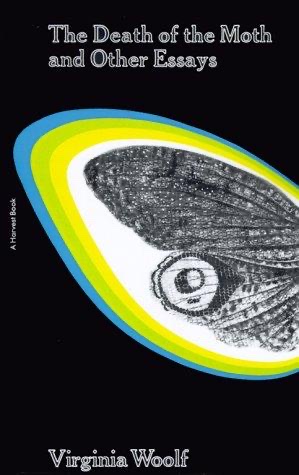
Cover of The Death of the Moth

The Death of the Moth

Virginia Woolf

5 ideas

  1. Watching a Day Moth Die

    On a September morning Woolf watches a small day-flying moth at her windowpane, flitting from corner to corner while rooks and ploughmen work in the fields outside. She sees it falter, fail to right itself, and briefly resume its struggle against a vast, indifferent power before lying still. She concludes that death is stronger than she is, yet the moth's tiny, useless resistance was 'strange' and admirable, pure life shown most clearly at the moment it was being extinguished.

  2. Killing the Angel in the House

    In 'Professions for Women,' the first obstacle a woman writer meets is an internalized phantom: the sympathetic, self-sacrificing, charming woman who whispers that she must flatter, soothe and never hold opinions of her own. Woolf says she had to kill this figure in self-defense, because it would otherwise have plucked the heart out of her writing. Only after that could she face the harder, unsolved problem of telling the truth about her own experiences as a body.

  3. Words Resist Being Made Useful

    In 'Craftsmanship,' Woolf argues that words don't carry one meaning cleanly like a tool, because each is saturated with centuries of associations, echoes and memories. They live in the mind and in other words, not singly in dictionaries, so any attempt to fix or purify them kills them. Good writing works with this promiscuity, letting words combine and suggest, rather than forcing them into single utilitarian statements.

  4. Thinking as Fighting Against Inner Aggression

    In 'Thoughts on Peace in an Air Raid,' written as German planes pass overhead, Woolf argues that people without weapons can still fight by thinking against the current, dragging buried assumptions into consciousness. The enemy includes a 'subconscious Hitlerism,' the desire to dominate and enslave that lives inside citizens of democracies too. Lasting peace therefore requires creating outlets for the instincts that make war attractive, not just defeating an external enemy.

  5. Walking the City as Pure Eye

    In 'Street Haunting,' Woolf uses the excuse of buying a pencil on a winter evening to leave home and shed the self that familiar objects keep fixed in place. Among anonymous crowds she becomes an 'enormous eye' that skims surfaces and briefly imagines itself into strangers' lives without being tied to any identity. The lens treats aimless urban walking as a way to escape one fixed self and to see through many others.

Save and mark ideas in the app