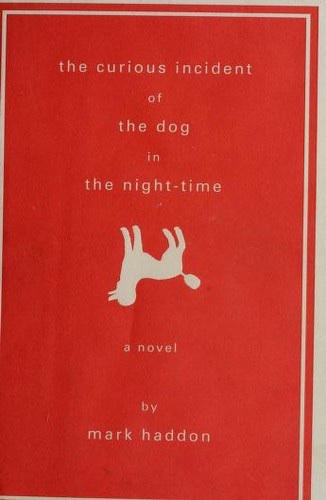
Cover of The Curious Incident of the Dog in the Night-Time

The Curious Incident of the Dog in the Night-Time

4 ideas

Buy on Amazon
  1. Boy Solves Dog Killing, Finds Family Secret

    A 15-year-old narrator with autism sets out to investigate who killed a neighbor's dog with a garden fork, keeping a detective notebook. His inquiry leads him to discover his father killed the dog and had lied that his mother was dead when she had actually left with the neighbor, so the investigation into one event exposes a hidden structure of lies.

  2. Literal Mind Exposes Social Fictions

    A narrator who cannot read facial expressions, metaphor, or white lies renders ordinary adult life strange by taking everything at face value. Through this lens, social conventions, euphemisms, and 'harmless' lies become visible as arbitrary and often deceptive constructions rather than neutral background.

  3. Order As Defense Against Overload

    The narrator manages overwhelming sensory and emotional input through rigid rules, counting systems, and ranking days good or bad by seeing colored cars in sequence. Imposed order is not irrationality but a functional coping mechanism: predictability substitutes for the intuitive filtering others do automatically.

  4. Lies Multiply Because Reality Is Singular

    The narrator reasons that he cannot tell lies because a lie requires imagining all the other things that did not happen, which is endless, whereas the truth is only one thing. This frames honesty as cognitively simpler than deception and deception as an open-ended generative burden.

Save ideas and give them a thumbs up or down in the app