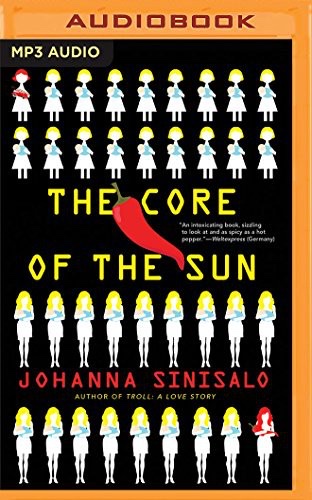
Cover of The Core of the Sun

The Core of the Sun

Johanna Sinisalo

4 ideas

  1. Vanna passes as docile to find her sister

    In an alternate 2010s Finland, Vanna is an intelligent woman who was coached as a child to pass as an 'eloi,' the state's bred category of docile, decorative women. She is truly suited to the sterilized 'morlock' labor caste. When her genuinely eloi sister Manna disappears after marrying, Vanna risks exposure by investigating, relying on illegal chilli and a partnership with a chilli dealer, Jare. Together they drift toward a cult pursuing an extreme pepper called the Core of the Sun.

  2. Eusistocracy: tyranny justified as citizen wellbeing

    The novel's state legitimizes total control by claiming to maximize its citizens' health and contentment. On that logic it bans mood-altering substances, including alcohol and even chilli, and engineers social roles. Because every restriction is framed as care rather than coercion, dissent looks like self-harm and becomes hard to articulate.

  3. Satire literalizes existing gender preferences into policy

    The book takes widespread informal preferences for women who are pliant, pretty, and uncompetitive and imagines them made into a formal state breeding and classification program. Women are split into eloi, bred for docility, and morlocks, sterilized workers. Exaggerating a norm into law exposes how much of the norm already operates as unwritten policy in the reader's world.

  4. Banned sensation becomes a vector of resistance

    When a regime bans intense experience, even something as trivial as capsaicin, the forbidden substance takes on political and spiritual weight. The illicit trade builds networks outside state control. The drug's physical intensity offers users a felt sense of self that the enforced placidity denies them. Prohibition thus creates the very counterculture and hunger for transcendence it was meant to suppress.

Save and mark ideas in the app