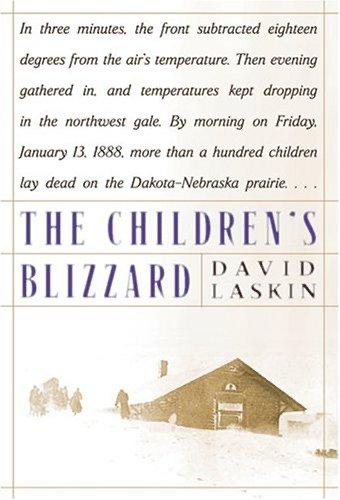
Cover of The Children's Blizzard

The Children's Blizzard

David Laskin

4 ideas

  1. The January 12, 1888 Prairie Blizzard

    On January 12, 1888, an unusually mild morning on the Dakota and Nebraska prairies drew children to school and farmers into the fields without heavy coats. By early afternoon an Arctic front arrived as a sudden wall of wind-driven ice dust, temperatures fell by dozens of degrees within hours, and visibility dropped to almost nothing. Many victims were children released from school into the storm, and estimates of the dead run from about 250 to 500.

  2. Centralized Forecasting Delayed Warnings Beyond Usefulness

    The Army Signal Corps gathered observations by telegraph, issued its predictions (called 'indications') from central offices, and relayed them back out by wire, where cold-wave flags were posted in towns and at rail depots. By the time a warning reached settlers on isolated homesteads, the storm had often already arrived. The failure came from the structure of the system: a slow, top-down chain of transmission connected a distant center to people with no way to receive its warnings in time, even when the forecasters had read the weather correctly.

  3. Boosterism Concealing Environmental Risk From Settlers

    Railroads, land agents, and territorial promoters recruited European immigrants with glowing descriptions of the prairie's fertility and healthful climate, including the theory that 'rain follows the plow.' Settlers therefore arrived without accurate knowledge of the region's violent weather and without the local experience to recognize warning signs. The marketing that filled the land also passed its risks to the people least able to judge them.

  4. Onset Decisions: Shelter in Place Versus Flight

    The death toll depended heavily on choices made in the first minutes of the storm, especially whether teachers kept children inside or tried to lead them home. People who stayed in a schoolhouse, burning desks and books for heat if necessary, mostly survived, while those who walked into the whiteout often lost their way within yards. Nebraska teacher Lois Royce left her school with three pupils. All three children died, and Royce survived with frostbite so severe that her feet were amputated.

Save and mark ideas in the app