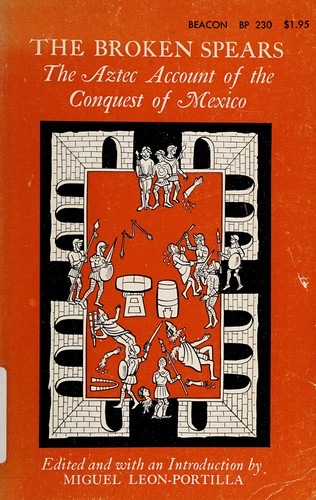
Cover of The Broken Spears

The Broken Spears

Miguel León-Portilla, ed.

4 ideas

  1. History narrated by the defeated side

    The conquest looks different when it is told through the Nahuatl testimonies of the people who lost it, not through the chronicles of the winners. Indigenous informants recorded what the Spanish sources leave out or play down: the massacres, the looting for gold, the famine and the grief. Which details count as history depends on whose memory gets written down.

  2. Omens that primed Tenochtitlan for catastrophe

    The accounts open with eight omens said to have appeared before the Spaniards arrived. They include a comet, a temple that burst into flames, a weeping woman in the night, and a strange bird with a mirror in its head. Setting these signs first makes the invasion read as a destiny already announced. This retrospective framing gave the collapse a meaning, and it also shaped how Moctezuma's hesitation was later remembered.

  3. Toxcatl massacre destroys the fragile truce

    During the festival of Toxcatl, Alvarado's men sealed the exits of the temple courtyard. They then cut down unarmed dancers and nobles. This single act of preemptive terror turned an uneasy coexistence into open war. It led directly to the Spanish expulsion on the Noche Triste.

  4. The icnocuicatl as a record of collective grief

    The book closes with icnocuicatl, the Nahuatl 'songs of sorrow' composed after the fall. One example is the lament that 'broken spears lie in the roads' and that 'the water has turned red.' These poems keep a record of trauma, loss of meaning and humiliation that numbers and battle narratives cannot hold. A defeated people used an existing poetic form to process and pass on its catastrophe.

Save and mark ideas in the app