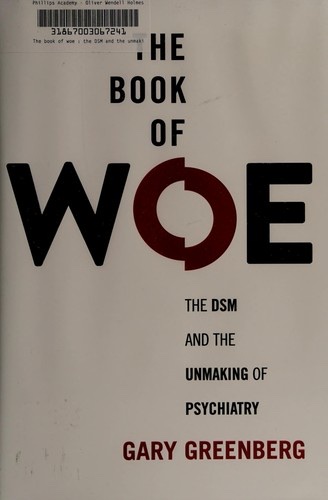
Cover of The Book of Woe

The Book of Woe

Gary Greenberg

4 ideas

  1. DSM-5 field trials' embarrassing reliability numbers

    In 2012, the APA ran field trials in which two clinicians independently diagnosed the same patients. Instead of revising the categories, DSM-5 leaders argued that kappas of 0.2 to 0.4 could be acceptable, lowering the bar so the manual could go forward.

  2. Diagnostic authority built on agreement, not validity

    Since DSM-III in 1980, psychiatry has claimed scientific standing through reliability: checklist criteria make clinicians more likely to assign the same label. Agreement does not show that a label names a real disease. Because no biological markers exist for these disorders, DSM categories are negotiated conventions, and their apparent objectivity comes from standardized wording rather than from anything discovered about the underlying condition.

  3. Bereavement exclusion removal as diagnostic inflation

    Earlier DSMs excluded recent grief from a depression diagnosis. Critics led by former DSM-IV chair Allen Frances saw this as a case of diagnostic inflation. Loosening a criterion's boundary quietly turns ordinary human suffering into treatable pathology and widens the market for medication.

  4. The manual as institutional infrastructure

    Read the DSM as administrative plumbing rather than a scientific map. Insurers need its codes to pay claims, drug companies need its categories to get approvals, researchers need them to get grants, and courts rely on them too. That dependence explains why DSM-5's promised paradigm shift to dimensional, spectrum-based diagnosis was largely abandoned: too many systems were locked into the old categories. It also explains why NIMH director Thomas Insel could publicly walk away from the manual's validity while the institutions kept using it anyway.

Save and mark ideas in the app