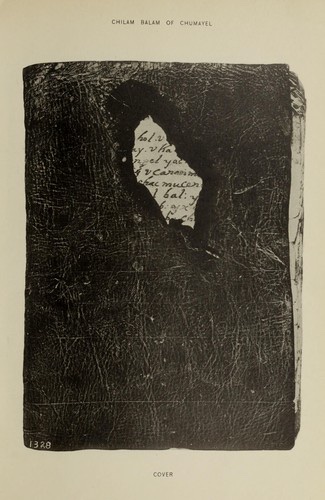
Cover of The Book of Chilam Balam of Chumayel

The Book of Chilam Balam of Chumayel

Anonymous

4 ideas

  1. Conquest as calendar disruption, not battle

    The texts register Spanish arrival primarily as a breaking of the katun cycle's proper order, with foreign rule seating itself out of turn and bringing counterfeit or 'two-day' lords. Seen this way, colonization is experienced as a corruption of time and legitimate succession more than as a military defeat, so resistance and grief attach to the calendar rather than to battlefields.

  2. Cyclical katun prophecy as predictive history

    Each of the thirteen katuns (roughly 20-year periods) carries a fixed character, so events recorded for a katun are expected to recur when that katun returns about every 256 years. History and prophecy become the same genre: chronicling the past is how one forecasts the future, and new events such as the conquest are read as the return of an already-known katun's burden.

  3. Colonial rule arrives as disease and tribute

    The texts insist that before the Spaniards there was no sickness, no aching bones, no fever, and that the foreigners introduced epidemic, forced tribute, debt, and hunger. The harm of conquest is measured through bodily suffering and economic extraction imposed over time, which frames colonization as a chronic condition rather than a single event.

  4. Riddle language as legitimacy test for rulers

    The 'Language of Zuyua' sets candidates for office esoteric riddles, such as asking them to bring 'the sun' (a fried egg) or 'the brains of heaven' (copal incense), which only those with inherited lineage knowledge can decode. Correct interpretation proves rightful descent and grants office, while failure exposes impostors, making coded ritual knowledge a gatekeeping mechanism for political authority.

Save and mark ideas in the app