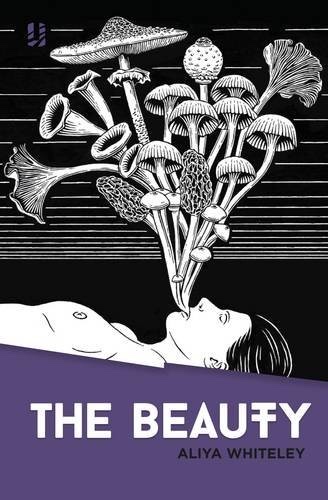
Cover of The Beauty

The Beauty

4 ideas

Buy on Amazon

After a fungal disease kills the women, a community of men and boys lives with their absence. Then mushroom-like beings emerge from the graves. Through Nate, the group’s storyteller, Aliya Whiteley’s novella follows a community facing something that unsettles its memories of the dead and its hopes for the future.

  1. The Valley men and the grave-born Beauties

    After a fungal disease kills every woman on Earth, a small, isolated community of men and boys buries its dead. Yellow mushroom-like beings shaped like women, the Beauties, then grow from the graves. Nate, the group's young storyteller, bonds with one, and the men discover that intimacy with the Beauties changes their own bodies, drawing them into the fungus's reproductive cycle.

  2. Storytelling as a community's survival organ

    Nate's job is to retell the stories of the dead women each night, so memory lives through one designated voice rather than through records. Whoever controls the retelling decides what the community believes it lost and what it should want next. When the stories change, the group's sense of identity and its willingness to accept new beings change with them.

  3. Gender roles persist without their original bearers

    When one sex vanishes entirely, the remaining group does not drop gendered roles. It reassigns them, and some members take on caretaking or 'feminine' identities to fill the gap. This shows that gender works as a social structure the group needs, not only as a property of bodies.

  4. Love as colonizing symbiosis

    The Beauties' tenderness cannot be separated from their biological agenda. Their affection is the way the fungus enters the men and remakes them into hosts. Desire, comfort and parasitism become one process, which makes it impossible to say whether the men are being loved or consumed.

Save ideas and give them a thumbs up or down in the app