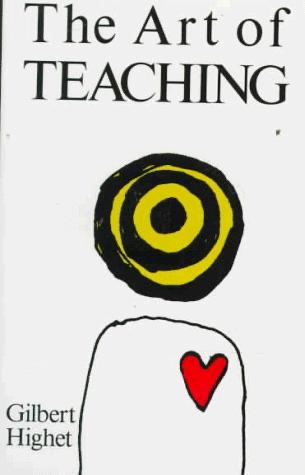
Cover of The Art of Teaching

The Art of Teaching

Gilbert Highet

6 ideas

  1. Teaching is an art, not a science

    Teaching cannot be reduced to a scientific method because it involves human emotions and values that resist measurement and replication. A teacher who applies a fixed procedure to students as if they were chemical reactions will fail. Success depends on judgment, sympathy, and improvisation, the way success in painting or music does.

  2. The good teacher's essential qualities

    The effective teacher must know the subject thoroughly and must like it, since boredom with material is instantly contagious. The teacher must also like the students, meaning young people's energy, ignorance, and potential. On top of these rest the abilities of memory, willpower, and kindness, plus a broad knowledge of life beyond the subject so it can be connected to everything else.

  3. Three stages of lecture design

    Every piece of teaching should be built in three deliberate stages: preparation, communication, and making sure the material has been absorbed. Preparation means mastering and structuring material long before class. Communication means performing it with clarity and vitality. Absorption means checking, through questions, repetition, and application, that it actually stuck, since delivery alone does not produce learning.

  4. Tutoring as mind-to-mind confrontation

    In one-to-one tutoring, the aim is not to transmit facts but to expose and repair the student's own reasoning in real time. The tutor reads the individual's specific confusions and ambitions and adjusts to them, which a lecture to many cannot do. That is why tutoring, though costly, produces the deepest intellectual transformation.

  5. Socrates teaching by provoking questions

    His method made learners do the thinking, turning confident assertion into productive perplexity. It shows that a teacher's most powerful tool can be the well-aimed question rather than the answer.

  6. Jesuit system of disciplined repetition

    The Jesuits built one of history's most effective school systems through carefully graded curricula, constant review, competition between students, and close personal supervision. They paired rigorous drilling with attention to each pupil's character. The case shows that systematic structure and individual care can reinforce each other rather than conflict.

Save and mark ideas in the app