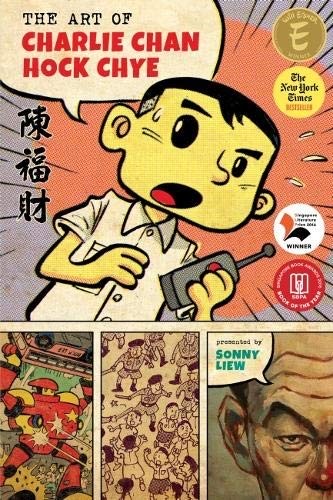
Cover of The Art of Charlie Chan Hock Chye

The Art of Charlie Chan Hock Chye

Sonny Liew

4 ideas

  1. Lim Chin Siong as the unchosen founder

    The book retells Singapore's 1950s–60s path to independence around Lim Chin Siong, the charismatic left-wing union leader who co-founded the PAP with Lee Kuan Yew and was detained without trial under Operation Coldstore in 1963. Charlie's comics imagine counterfactuals in which Lim wins power, recasting a figure the official 'Singapore Story' frames as a communist threat as a popular leader whose removal decided the nation's course. It is a concrete case of how a state's founding narrative can be built by erasing the rival who nearly won.

  2. Fictional archive as historiographic argument

    Liew invents a cartoonist and fabricates his whole body of work: sketches, published strips, and interviews, all presented with the apparatus of an art-book retrospective. The fake documentary frame lets alternative history be told as 'found evidence', showing that archives, captions, and curatorial framing, not facts alone, give a narrative its authority. By making the forgery visible, the form invites readers to question the equally constructed provenance of official history.

  3. Style shifts as a record of eras

    Charlie's comics move through the visual idioms of Osamu Tezuka, Walt Kelly's Pogo, Mad magazine, Frank Miller, and Marvel superheroes. Each borrowed style carries the ideological mood and imported influences of its moment in Singapore's history. Reading how something is drawn, not just what it depicts, exposes a society's shifting cultural dependencies and political temperature.

  4. Obscurity is the cost of dissent

    The book argues that in a soft-authoritarian state, silencing rarely takes the form of dramatic censorship. It works through neglect, missing opportunities, and the slow unviability of a career, a point echoed when the book's own arts grant was withdrawn.

Save and mark ideas in the app