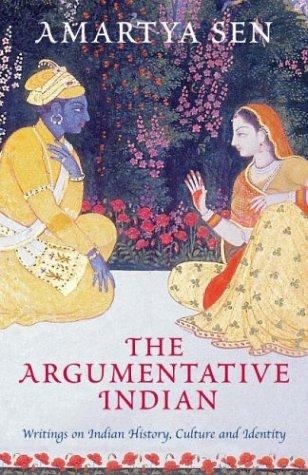
Cover of The Argumentative Indian

The Argumentative Indian

Amartya Sen

5 ideas

  1. Akbar's interfaith dialogues at Fatehpur Sikri

    He declared that the 'pursuit of reason' (rahi aql) rather than 'reliance on tradition' should decide questions of belief and social policy, and that no one should be interfered with on account of religion. This happened while the Inquisition was still operating in Europe, which Sen uses to show that tolerance and secularism are not Western imports into India.

  2. Free press and elections prevent famines

    Substantial famines do not occur in functioning democracies because a free press exposes starvation early and elected governments face political penalties for letting people die. British-ruled India suffered the 1943 Bengal famine, which killed about 2 to 3 million people. Independent, democratic India has had no major famine since 1947, despite persistent chronic undernourishment that is less visible and so less politically punished.

  3. Exoticist, magisterial and curatorial views of India

    Sen classifies Western readings of India into three kinds. Exoticist readings seek the strange and spiritual. Magisterial readings, written from the standpoint of imperial rule, frame India as needing governance. Curatorial readings catalogue and preserve Indian culture. The first two systematically erase India's rationalist, scientific and skeptical traditions, and Indian nationalists then often absorb those same distortions.

  4. Plural identities defeat sectarian reduction

    Every person holds many simultaneous identities, including religion, language, class, profession, region and politics, and can reason about which ones to prioritize in a given context. Sectarian movements such as Hindutva work by collapsing this plurality into a single religious identity and rewriting a heterodox, multi-religious past as a uniform Hindu one. Recognizing plural affiliation is therefore a direct defense against communal violence.

  5. Arjuna's consequences versus Krishna's duty

    In the Bhagavad Gita, Arjuna refuses to fight because of the killing the war will cause, and Krishna persuades him to do his duty regardless of outcomes. Sen argues that Arjuna's consequence-sensitive objection is never actually refuted and deserves equal standing. The dialogue then becomes a live ethical test of duty-based reasoning against responsibility for foreseeable results, not a settled scripture of obligation.

Save and mark ideas in the app