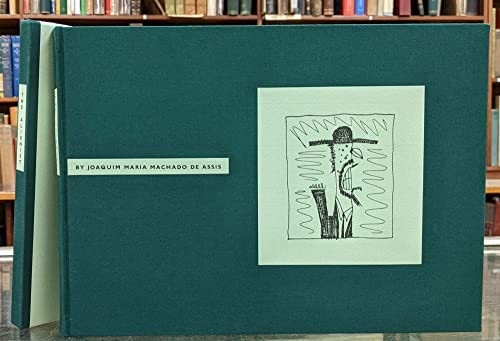
Cover of The Alienist

The Alienist

Machado de Assis

4 ideas

  1. Bacamarte confines the town, then himself

    In the Brazilian town of Itaguaí, Dr Simão Bacamarte founds the Casa Verde asylum and, under ever-widening definitions of insanity, confines about four-fifths of the population, including his own wife. He then reverses his theory, releases everyone, and locks up the rare people of perfect mental balance, 'curing' each by drawing out a hidden vice. Finding no flawless mind left except his own, he concludes that he alone is abnormal, commits himself to the asylum, and dies there after seventeen months.

  2. Madness is defined relative to majority

    When the expert labels most of the town insane, his theory collapses. This shows that 'abnormal' has no fixed content: it means whatever deviates from the statistical majority. Bacamarte's inversion, confining the balanced instead of the unbalanced, uses the same method with the baseline flipped, and it produces the opposite population of patients, which exposes how arbitrary the diagnostic line is.

  3. Unfalsifiable expertise expands until it consumes everything

    A theory held by an authority whom no one can question absorbs every contrary case as further confirmation. Bacamarte reads prudence, generosity, vanity and fear alike as symptoms, so no behavior can count as evidence of sanity. Watch any expert classification scheme for this pattern: if nothing could fall outside the category, the category is measuring the classifier, not the world.

  4. Revolutionaries adopt the power they overthrew

    The barber Porfírio leads the Canjica revolt against the asylum in the people's name. Once he takes control of the town, he allies with Bacamarte and keeps the confinements running, because the asylum is useful to whoever governs. Popular uprisings aimed at an institution tend to capture it rather than dismantle it, and the new rulers inherit its logic along with its power.

Save and mark ideas in the app