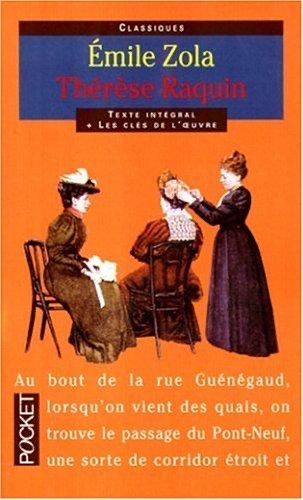
Cover of Thérèse Raquin

Thérèse Raquin

Zola

4 ideas

  1. Drowning Camille and the lovers' disintegration

    Thérèse, stifled in a damp haberdashery in the Passage du Pont-Neuf with her sickly husband Camille and his mother, begins an affair with his friend Laurent. They marry once enough time has passed, but Camille's imagined corpse lies between them in bed and desire turns to hatred. Madame Raquin, paralysed and mute, learns the truth and watches their collapse, and the pair end by taking poison together in front of her.

  2. Characters as temperaments rather than souls

    Zola builds his people as physiological types rather than moral agents: Thérèse is nervous and repressed, Laurent is sanguine, coarse and appetite-driven. Their actions follow from how these temperaments combine and are pressed by circumstance, not from free choice. Crossing a nervous temperament with a sanguine one is treated as a chemical reaction whose outcome, lust then murder then breakdown, is determined.

  3. Remorse is a nervous disorder, not conscience

    The murderers are not punished by moral awakening or by the law, which never suspects them. Their guilt takes the form of bodily symptoms: hallucinations, insomnia, the throbbing bite scar, and Laurent's nerves becoming as fragile as Thérèse's. The crime destroys the passion it was meant to free, because the shared memory of the killing physically contaminates their contact.

  4. The novelist as dispassionate clinical dissector

    In his preface to the second edition, Zola answers the charge of obscenity by casting himself as a surgeon who performs on living bodies the analysis anatomists perform on corpses. On this view a novel is an experiment that places given temperaments in a given milieu and records the results. Moral outrage at the subject matter is then a category error, like condemning a medical case study.

Save and mark ideas in the app