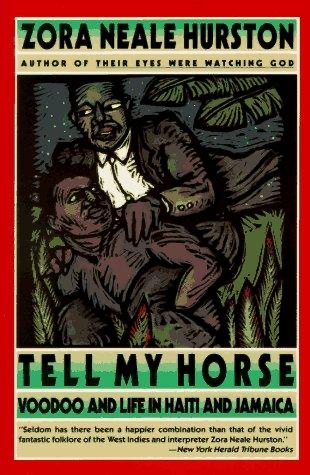
Cover of Tell My Horse

Tell My Horse

Zora Neale Hurston

4 ideas

  1. Felicia Felix-Mentor, the photographed zombie

    Hurston rejected resurrection as an explanation. She argued that zombies were real people put into a death-like state with a secret drug, then revived and kept as mind-damaged labourers, and that this knowledge was guarded by secret societies.

  2. Possession as licence for social critique

    In Vodou, a possessed person is the 'horse' ridden by the spirit, so words spoken during possession are credited to the god rather than to the human. Guédé, the spirit of the poor, uses possessed peasants to mock and insult the elite, prefacing remarks with 'tell my horse.' The frame lets people say what would be dangerous to say in their own name, because no one can punish a person for what the god said.

  3. Jamaica's colour ladder erases Black ancestry

    Hurston argues that Jamaican society ranks people by skin shade. Mixed-race Jamaicans raise their status by claiming only their white fathers and disowning their Black mothers, which she mocks as the land where 'the rooster lays an egg.' Status is thus bought through selective genealogy, so the colonial race hierarchy is maintained by the colonised themselves.

  4. Knowledge through initiation, not observation

    Hurston treats belief systems as learnable only from inside. She joined ceremonies, underwent ritual training and took part in hunts and feasts rather than watching and cataloguing. This stance treats practitioners' own explanations as data to be taken seriously while still testing them, which reveals mechanisms like drugs and social functions that detached observers miss or dismiss as superstition.

Save and mark ideas in the app