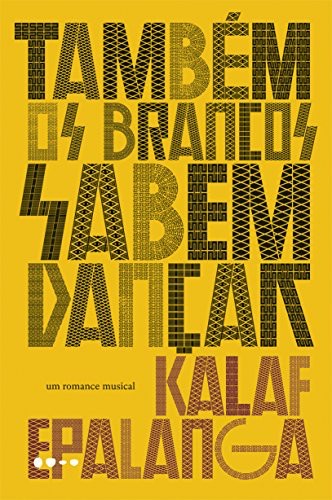
Cover of Também os Brancos Sabem Dançar

Também os Brancos Sabem Dançar

Kalaf Epalanga

4 ideas

  1. Kuduro musician detained at Norwegian border

    An Angolan kuduro musician (the narrator, modeled on Epalanga himself, formerly of Buraka Som Sistema) is stopped by Norwegian border police en route to a gig because his residence papers are irregular, and is held while officials interrogate his identity and right to move. The interrogation becomes a scene in which a touring artist with an international career is reduced to a document status, showing how legal paperwork, not talent or reputation, determines whether a Black African body may circulate in Europe.

  2. Kuduro as a record of Angolan history

    Kuduro, born in 1990s Luanda during civil war, encodes the country's experience of violence, scarcity and improvisation in its sound and movement: cheap PCs, pirated software, jerky broken-bodied dance moves echoing war amputees and street survival. The music is therefore an archive of social history made by people excluded from official history-writing, not merely party music.

  3. Dance as bodily identity and belonging

    The book treats how a person moves on a dance floor as a language of origin, class and belonging that precedes and exceeds words or passports. The title's irony flips the stereotype of who has rhythm, suggesting that dance can be learned and shared across race, and so rhythm works as a porous rather than fixed marker of identity.

  4. Lisbon as Lusophone diaspora crossroads

    The post-colonial capital becomes the hub where Angolan, Cape Verdean, Mozambican and Brazilian migrants remix their music in suburban clubs and bairros, producing new genres that then travel back to Africa and outward to the world. Cultural innovation happens at the colonial metropole's margins, among people the city treats as peripheral.

Save and mark ideas in the app