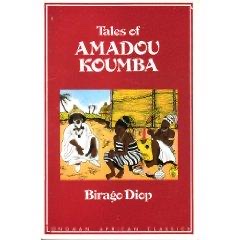
Cover of Tales of Amadou Koumba

Tales of Amadou Koumba

Birago Diop

4 ideas

  1. The Two Humps and Envy's Price

    Of two co-wives each bearing a hump, the gentle Khary goes among the spirits at night, joins their dancing, and is relieved of her deformity. Her envious rival imitates the visit to win the same reward, but approaches it with grasping intent and is given Khary's discarded hump on top of her own. The tale shows that a copied gesture carries none of the grace of its original; envy turns another's good fortune into the imitator's doubled burden.

  2. Sarzan: The Returning Soldier Unhinged

    A sergeant returns to his village from service in the colonial army and sets out to 'civilize' it. He mocks the elders, smashes the ancestral shrines, and cuts down the sacred trees. He is then struck by a madness that leaves him wandering and chanting, and the village reads this as the price of severing himself from the dead. The story shows how assimilation that treats inherited belief as superstition can destroy the person doing the assimilating, not only the tradition.

  3. The Dead Live in Things

    The poem embedded in the collection urges the listener to hear things more than beings: the dead are not under the earth but in the rustling tree, the moaning wood, the flowing water, the fire, and the crowd. This view makes the natural world a medium through which ancestors keep speaking. Continuity with the past becomes something you perceive in your surroundings rather than something you remember.

  4. Kindness Repaid With Ingratitude

    A child carries a stranded crocodile back to the river, and the crocodile then seizes him to eat him. When they ask for judgment, an old cow and an old horse agree that good is always repaid with evil, since each was cast off after a lifetime of service. The hare then asks them to re-enact the scene 'to understand it,' which returns the crocodile to dry land and leaves it helpless. The story holds that testimony from the embittered confirms injustice, while cunning, not appeals to fairness, reverses it.

Save and mark ideas in the app