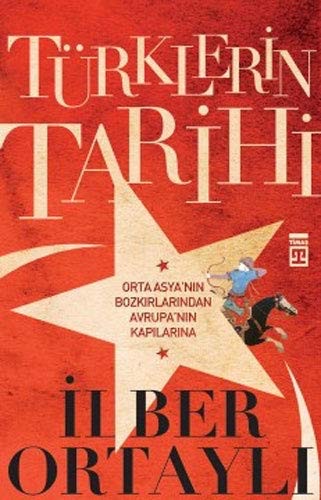
Cover of Türklerin Tarihi

Türklerin Tarihi

İlber Ortaylı

4 ideas

  1. Bilge Kağan's Warning Against Chinese Silk

    The Orkhon inscriptions, raised in the 730s for the Göktürk rulers Bilge Kağan and his brother Kül Tigin, record the khagan warning his people that the Chinese gave gold, silver and silk freely while using 'sweet words and soft silks' to draw Turks into settling near China. Those who moved closer, he says, were absorbed or destroyed.

  2. Dynastic Shared Sovereignty and Divided Steppe States

    In the Turkic steppe tradition, the right to rule (kut, granted by heaven) belonged to the ruling family as a whole, not only to a single heir. The realm was also routinely split into eastern and western, or senior and junior, wings under different members of the dynasty. This made steppe empires quick to expand, but it built succession fights and fragmentation into their structure, which helps explain why they so often split after a strong khagan died.

  3. Turks Repeatedly Adopted Their Neighbors' Religions

    Across their history, Turkic peoples did not keep a single faith but took up the religions of the civilizations they encountered. Göktürks held Tengri beliefs, Uyghurs adopted Manichaeism and Buddhism, the Khazar elite took up Judaism, some groups became Christian, and most finally converted to Islam. On this account, Turkic identity rested on language, state tradition and political organization rather than on a fixed religion, and that adaptability is what let them rule over diverse settled populations.

  4. The Ottoman Empire as Rome's Heir

    Read the Ottoman state as a successor to Rome and Byzantium, not as a narrowly ethnic 'Turkish' state. After taking Constantinople in 1453, Mehmed II claimed the title Kayser-i Rum (Caesar of Rome) and kept the imperial capital, its administrative habits and its multi-confessional order. Through this lens the empire's many peoples, its millet arrangements and its European ambitions look like the continuation of an imperial tradition rather than an anomaly.

Save and mark ideas in the app