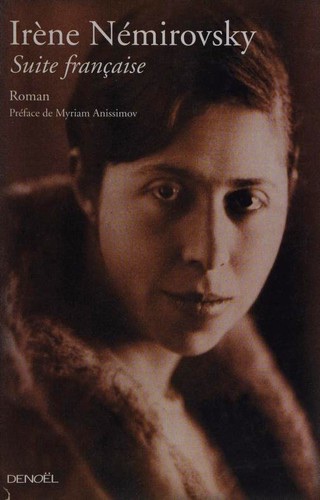
Cover of Suite Française

Suite Française

Irène Némirovsky

4 ideas

  1. The notebook that survived its author

    Irène Némirovsky, a Kyiv-born Jewish novelist living in the Burgundy village of Issy-l'Évêque, wrote the first two parts of a planned five-novel cycle about France's defeat and occupation as the events were happening in 1941–42. In July 1942 she was arrested, held at Pithiviers and deported to Auschwitz, where she was murdered. Her husband was deported and killed soon after. Her young daughters carried the notebook with them while in hiding, assumed it was a diary too painful to read, and did not transcribe it until 1998; it was published in 2004 with her working notes and correspondence appended.

  2. Collapse strips status down to conduct

    When the June 1940 exodus sweeps every class of Parisian onto the same roads, social rank no longer predicts decent behavior, and it often predicts the reverse. The celebrated writer Gabriel Corte and the aesthete Charles Langelet treat fellow refugees as obstacles, and Langelet steals petrol from a young couple who had helped him. The modest bank clerks Maurice and Jeanne Michaud keep their dignity even after their employer abandons them and then dismisses them. Crisis does not create character. It removes the cushioning that let refinement stand in for character.

  3. The priest killed by his charges

    Father Philippe Péricand, a devout son of a bourgeois Catholic family, is given charge of a group of orphaned delinquent boys during the flight from Paris. He tries to lead them with sincere Christian charity. The boys turn on him and drown him in a pond. The episode shows that goodwill and self-sacrifice give no protection once social order dissolves. It also shows that people shaped by institutional neglect do not answer abstract benevolence in the way the benefactor imagines.

  4. Occupation as enforced intimacy

    In the village of Bussy, the German occupation is not experienced mainly as battle. It is lived as cohabitation: soldiers billeted in homes, sharing kitchens, gardens and evenings with the families they rule. That closeness makes enemies legible as individuals. Lucile Angellier and the officer Bruno von Falk slowly become attached through music and conversation. Meanwhile old village resentments between peasants and landowners decide who informs on whom and who shelters whom. Read this way, collaboration and resistance grow less from ideology than from proximity, private grievance and personal loyalty.

Save and mark ideas in the app