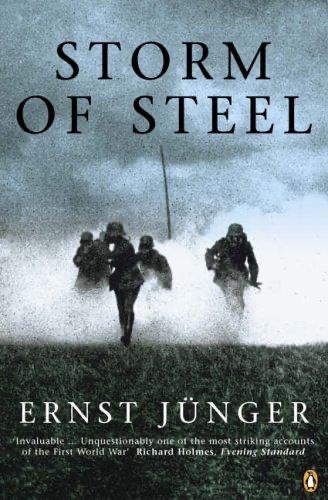
Cover of Storm of Steel

Storm of Steel

Ernst Jünger

4 ideas

  1. Jünger's August 1918 wounding and Pour le Mérite

    He was then awarded the Pour le Mérite, the Prussian army's highest decoration and rarely given to junior infantry officers. The episode shows a man who treated repeated wounding as a record of trial rather than as grounds for rejecting the war.

  2. Combat as ordeal that reveals character

    Jünger frames the front not as meaningless slaughter but as a testing ground where fear, endurance and nerve are stripped bare and a man learns what he is. Under this lens, suffering and danger are the price of self-knowledge and exaltation, so their scale does not make the experience futile. The same material facts of mud, gas and death can be read as indictment or as initiation depending on this frame.

  3. The storm-troop fighter as industrial-war specialist

    Once artillery made mass infantry assaults suicidal, small bands of picked men carrying grenades, flamethrowers and light machine guns infiltrated weak points and bypassed strongpoints instead of advancing in lines. Jünger presents the Stoßtrupp leader as a new type, a cool technician of violence whose initiative and small-unit cohesion, not numbers, decide the local fight. Individual agency returns through specialization inside an otherwise anonymous machine of materiel.

  4. Unsentimental precision instead of moral commentary

    Jünger records wounds, corpses, raids and killings in flat, exact detail and largely declines to editorialize about whether the war was right or wrong. Withholding judgment gives the account documentary authority, but it also lets the violence stand as aesthetic and heroic experience. That is why readers split on whether the book is neutral testimony or glorification.

Save and mark ideas in the app