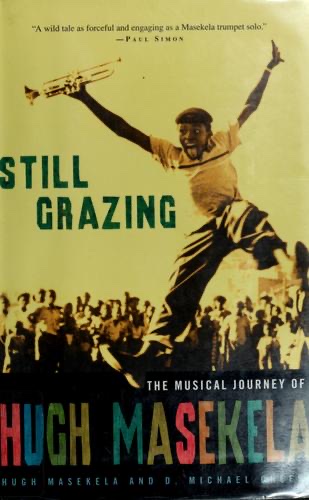
Cover of Still Grazing

Still Grazing

Hugh Masekela with D. Michael Cheers

4 ideas

  1. Huddleston's trumpet launches a township prodigy

    As a teenager at St. Peter's school in Johannesburg, Masekela saw the film 'Young Man with a Horn' and told Father Trevor Huddleston, the anti-apartheid Anglican priest, that he would stay out of trouble if he got a trumpet. Huddleston bought him one, helped form the Huddleston Jazz Band, and later got Louis Armstrong to send the band a trumpet. One sponsor's small, concrete gift connected a Sophiatown boy to a global musical lineage and set the course of a forty-year career.

  2. Originality comes from home idioms, not imitation

    Arriving in New York, Masekela tried to play like the American bebop masters. Dizzy Gillespie and others pushed him to build on the South African township music he had grown up with. His distinct voice, including the hit 'Grazing in the Grass', came from fusing those local roots with jazz rather than competing on American terms, where he could only ever be derivative.

  3. Exile as both creative engine and wound

    Exile from apartheid South Africa gave Masekela access to world stages, collaborators and fame. It also cut him off from family, community and the musical ground he drew on. His career shows displacement working in two directions: homesickness and political urgency fed songs like 'Bring Him Back Home', while rootlessness fed the heavy drinking and drug use that eroded him.

  4. Decades of drink, belated recovery

    Masekela recounts decades of heavy alcohol and drug use. It began in the shebeen culture of the townships and continued through his years as a touring star, feeding reckless behaviour and damaging his relationships while he kept performing. He finally entered rehabilitation only in his late fifties, after returning to South Africa, and describes the addiction frankly rather than romanticising it as the fuel of his music.

Save and mark ideas in the app