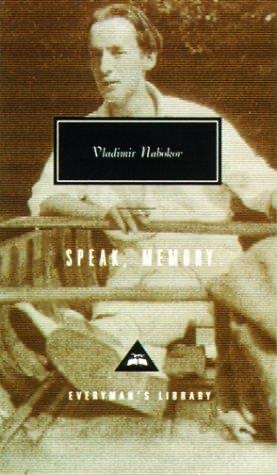
Cover of Speak, Memory

Speak, Memory

Vladimir Nabokov

4 ideas

  1. The colored alphabet of a synaesthetic child

    From early childhood Nabokov saw each letter with a fixed color and texture. The long English a had the tint of weathered wood, hard g was vulcanized rubber, r a sooty rag being ripped, and o an ivory-backed hand mirror. At about seven he told his mother that the colors on his alphabet blocks were all wrong, and she, who also had colored hearing, treated this as normal rather than odd.

  2. Autobiography as tracing recurring thematic designs

    Nabokov argues that the real task of memoir is to follow the motifs that recur across a life, not to set events in chronological order. His example: General Kuropatkin once amused the boy with a trick using matches. Years later, fleeing the Bolsheviks disguised as a peasant, Kuropatkin stopped Nabokov's father on a bridge to ask for a light, and seeing that rhyme reveals a pattern that plain chronology hides.

  3. Father tossed skyward, a premonition of death

    At Vyra, grateful peasants would toss Nabokov's father into the air, and from the dining-room window the boy saw him hang for a moment against the sky like a figure painted on a church ceiling. The memoir closes the image with an open coffin and funeral lilies. It points ahead to his father's death in Berlin in 1922, shot while shielding the politician Milyukov from an assassin.

  4. Folding time like a magic carpet

    Nabokov says he does not believe in time and likes to fold his magic carpet so that one part of the pattern lies over another. Remembering this way puts moments from different decades side by side, so their resemblance becomes visible and time loses its power to separate. This precise, overlapping recall is his defense against a life he describes as a brief crack of light between two eternities of darkness.

Save and mark ideas in the app