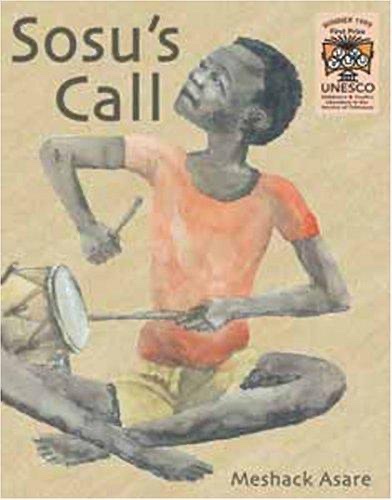
Cover of Sosu's Call

Sosu's Call

Meshack Asare

4 ideas

  1. Disabled boy drums alarm, saves flooding village

    In a Ghanaian fishing village between the sea and a lagoon, Sosu, a boy who cannot walk, is kept at home because some villagers believe a child like him brings bad luck. When a sudden storm drives the sea into the village while most able-bodied adults are away, he drags himself to the village drum and beats the alarm, calling the adults back in time to rescue the old people and young children. Afterward the village honours him, and he receives a wheelchair that lets him go to school and move through the community he had been kept out of.

  2. Superstitious exclusion hides capability until crisis

    When a community reads a visible impairment as a sign of bad luck or uselessness, it stops seeing what the person can do, so their abilities stay invisible. The mistake is only corrected when an emergency forces the excluded person to act and they succeed in plain view. Recognition then comes from a public demonstration, not from anyone changing their mind in advance.

  3. The one left behind is present

    The people a community routinely leaves behind, such as the immobile, the young, and the old, are the ones who are there when the mobile majority is gone. Exclusion therefore turns into an unintended advantage in a crisis: the sidelined person is the only one positioned to see the danger and raise the alarm. Resilience depends on the people nobody counted on being able to act.

  4. Reward exposes what was withheld

    The wheelchair given to honour Sosu's heroism is the same support that would have let him go to school and join village life all along. Seen this way, a reward for an excluded person's heroism shows what the community had failed to provide. Access is recast as something owed from the start, not something the person must earn through extraordinary acts.

Save and mark ideas in the app