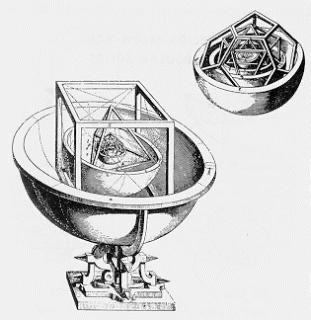
Cover of Somnium

Somnium

Johannes Kepler

4 ideas

  1. Duracotus's daemon-guided journey to Levania

    Duracotus, an Icelandic boy, is sold to a ship's captain by his herb-selling mother Fiolxhilde after he ruins one of her charm bags. He spends five years learning astronomy under Tycho Brahe on the island of Hven, then returns home, where his mother summons a daemon from Levania (the Moon). The daemon explains that humans can make the crossing only during a lunar eclipse, riding Earth's shadow in about four hours, drugged against the shock and given damp sponges to breathe through, and then describes lunar astronomy and life in detail.

  2. Every observer thinks its own world stands still

    Because the same illusion arises on any platform, perceived stillness says nothing about real motion. This turns the commonsense case against a moving Earth into evidence of observer bias, which is a disguised argument for Copernicanism.

  3. Subvolva, Privolva, and the fixed Earth-clock

    Because the Moon always keeps one face toward Earth, Levania divides into Subvolva, where Volva hangs almost motionless in the sky, and Privolva, which never sees it at all. For Subvolvans, Volva works as a clock and calendar: it stays in place, rotates visibly as its continents turn, and cycles through phases that mirror the Moon's phases as seen from Earth. A single orbital fact, tidal locking, thus produces two radically different skies and cultures on one body.

  4. Two-week days and nights produce ephemeral giant life

    A Levanian day-night cycle lasts about one Earth month, roughly fifteen days of scorching light and fifteen of freezing dark. Creatures would survive by constant migration, sheltering in caves and water, or growing protective crusts. Here the physics of the environment is used to deduce biology rather than simply to decorate it.

Save and mark ideas in the app