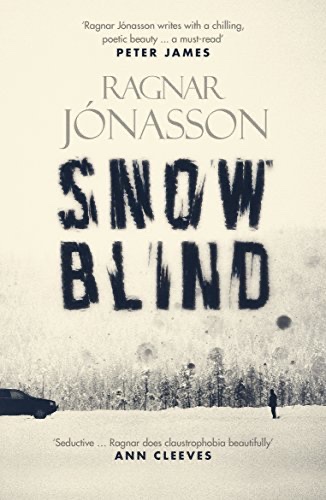
Cover of Snowblind

Snowblind

Iceland · 2008

4 ideas

Buy on Amazon

In winter in Siglufjörður, a small fishing town in northern Iceland, new policeman Ari Thór Arason investigates a death. An avalanche blocks the town’s tunnel, tightening the isolation as he tries to understand a close-knit community he has only just joined.

  1. Rookie investigates writer's death in snowbound Siglufjörður

    Ari Thór Arason, a Reykjavík theology dropout turned police recruit, takes a posting in Siglufjörður, a remote northern Icelandic fishing town, leaving his girlfriend behind in the capital. When Hrólfur Kristjánsson, an elderly celebrated author who chairs the local amateur dramatic society, is found dead at the foot of the theatre's stairs, his superior Tómas is inclined to call it an accident. Soon after, a young woman is found half-naked and bleeding in the snow, and an avalanche closes the town's only road link, a mountain tunnel, trapping investigator and suspects together through the dark winter.

  2. Geography as the locked room

    The closed-circle mystery needs a sealed space where the killer must be among a fixed group. Here a natural barrier does the sealing: an avalanche blocks the single tunnel into town, so no one can leave, no outside help can arrive, and the suspect pool is limited to the residents. Physical isolation turns a whole community into a drawing room, raising suspicion among neighbours and forcing the detective to work without reinforcements.

  3. Intimate communities hide more, not less

    In a town where everyone knows everyone, secrets are not rarer. They are guarded more carefully, because exposure has permanent social costs and residents close ranks against outsiders. The newcomer's handicap is also his advantage: he lacks the shared history that tells locals what not to ask, so he notices things they have learned not to see.

  4. Complacency turns suspicious deaths into accidents

    A place whose self-image is that nothing ever happens there will read an ambiguous death as a fall rather than a crime, because the benign explanation fits the story the community tells about itself. The error comes from a prior belief about the place, not from weighing the evidence. It takes someone who does not share that belief to keep the question open.

Save ideas and give them a thumbs up or down in the app