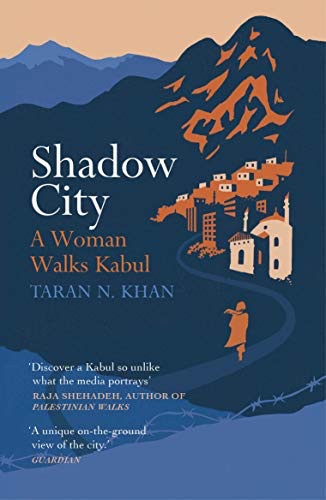
Cover of Shadow City: A Woman Walks Kabul

Shadow City: A Woman Walks Kabul

Taran Khan

4 ideas

  1. Afghan Film archivists hid reels from Taliban

    The hidden archive survived intact. Khan uses the episode, and the later efforts to restore and catalogue it, as her central case of ordinary Kabulis quietly carrying the city's cultural memory through regimes that wanted it erased.

  2. The shadow city under the visible one

    Kabul is read as two overlapping cities: the visible, war-damaged present and a shadow city of vanished buildings, former uses and remembered routes. Residents still give directions by landmarks that no longer exist, such as 'where the cinema used to be', so the lost city keeps working as a navigational and social map. To understand a heavily destroyed place, you must walk the absences as carefully as the structures.

  3. Who walks determines which city exists

    In a city where women rarely move on foot in public, a woman walking is conspicuous and becomes part of the scene she is observing. What she can see, where she can go and who will speak to her are all set by her gender and her mode of movement. Pedestrian access is therefore not neutral observation but a political condition that decides which version of a city gets recorded.

  4. Neither insider nor foreigner as vantage

    As an Indian Muslim woman, Khan was read in Kabul neither as a Western expatriate nor as a local. That in-between position gave her access that both groups lacked, along with its own constraints and misreadings. The observer's ambiguous identity works as a research instrument: it opens conversations and routes that a clearly categorized outsider or insider would not be offered.

Save and mark ideas in the app