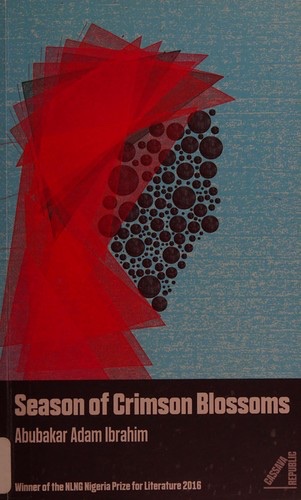
Cover of Season of Crimson Blossoms

Season of Crimson Blossoms

Abubakar Adam Ibrahim

4 ideas

  1. Widow Binta's affair with burglar Reza

    Hajiya Binta Zubairu is a devout 55-year-old grandmother in Abuja whose husband was killed in religious violence in Jos. Hassan 'Reza', a much younger leader of a weed-dealing gang who also works as a thug for a local politician, breaks into her home to rob her. Instead of an ending, the break-in starts a secret sexual and emotional affair that she pursues against every religious and communal norm, until it is exposed and brings violence into her family.

  2. Widowhood as enforced erasure of desire

    In a society that treats an older widow's sexuality as finished, her desire does not disappear. It goes underground, and it can erupt with the force of something never allowed expression. Binta's marriage had been dutiful and cold, so the affair is not a relapse into youth but her first real experience of wanting and being wanted. Seen this way, the scandal is the community's own suppression coming back to it rather than simple moral failure.

  3. Lovers as substitutes for missing kin

    Binta's pull toward Reza is tangled with her grief for her dead son, while Reza, estranged from his own mother, is drawn to her maternal tenderness as much as to her body. Each partner partly fills a family-shaped absence in the other. This makes the relationship both intensely consoling and unstable, because it rests on roles neither person can openly name.

  4. Politicians manufacture violent youth for hire

    Street violence in Northern Nigerian cities is not only produced by poverty or religion. Politicians actively recruit idle young men, supplying cash, drugs and protection in exchange for thuggery at election time. Reza's gang shows the mechanism: patronage turns unemployed youth into a dependable instrument of intimidation, and they are discarded once their usefulness ends.

Save and mark ideas in the app