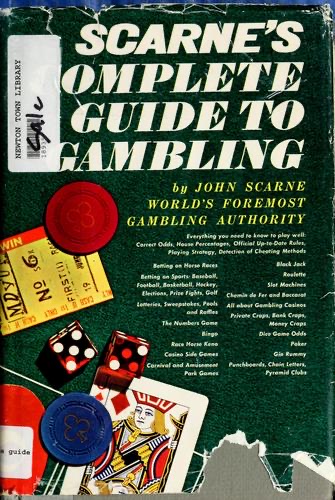
Cover of Scarne's Complete Guide to Gambling

Scarne's Complete Guide to Gambling

John Scarne

3 ideas

  1. Hourly cost of play as decision metric

    A game's true price is the house edge multiplied by the average bet multiplied by the number of decisions per hour. A low-edge game dealt very fast can cost more per hour than a higher-edge game dealt slowly. That makes the hourly expected loss, not the percentage edge alone, the figure a player should use to compare games.

  2. No betting system can overcome negative edge

    Progressions such as the martingale only rearrange when wins and losses happen. They cannot change the expected value of each bet, which stays negative. Because table limits and a finite bankroll cap the progression, these systems trade many small wins for rare catastrophic losses, and the total expected loss stays tied to the edge times the amount wagered.

  3. Payout versus true odds reveals the edge

    Every casino bet can be broken down by comparing the payout it offers with the true mathematical odds of winning. The gap between the two is the house's built-in cut. For example, paying 30 to 1 on a 35-to-1 chance quietly takes a percentage of every wager. Seen this way, 'long-shot' proposition bets with big payouts are usually the worst deals on the table, however generous they look.

Save and mark ideas in the app