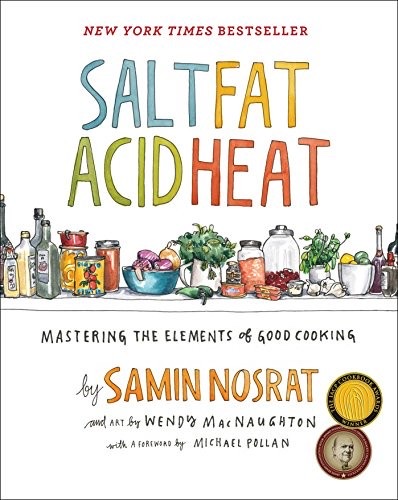
Cover of Salt Fat Acid Heat

Salt Fat Acid Heat

Samin Nosrat

3 ideas

  1. Salt enhances flavor rather than adding saltiness

    Properly used salt doesn't make food taste salty; it amplifies the food's own flavors by suppressing bitterness and heightening sweetness and aroma. Because salt needs time to diffuse, seasoning early (salting meat a day ahead, salting pasta water to taste like the sea) seasons food from within, while salting only at the table merely coats the surface.

  2. Four elements as a diagnostic for dishes

    Any dish can be evaluated and corrected by asking which of four variables is off: salt (flavor intensity), fat (flavor carrier and texture), acid (brightness and balance), or heat (texture via cooking method and temperature). Instead of following a recipe, the cook tastes, identifies the missing element, and adjusts, which makes improvisation possible.

  3. Acid as the balancing counterweight

    Acid brightens food and cuts through richness, so a dish that tastes flat or heavy after correct salting usually needs acid, not more salt. Layering acids works best: cooking acids like wine or tomato build depth, while finishing acids like citrus juice or vinegar added at the end give contrast and lift.

Save and mark ideas in the app