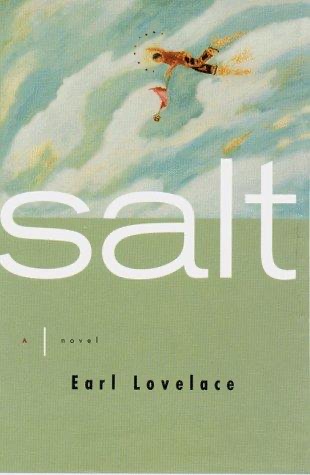
Cover of Salt

Salt

Earl Lovelace

4 ideas

  1. Salt: the weight that grounds the uprooted

    A legend holds that enslaved Africans who ate no salt could fly home to Africa, while those who ate it became too heavy to rise. The novel turns salt from a curse into a condition: once descendants of the enslaved, the indentured and the settlers have taken the land's salt into their bodies, return is impossible. The work becomes making the place of captivity into home, not escaping it.

  2. Alford George: from escape education to politics

    Alford George, a boy from a Trinidad village, is schooled to measure success by how far he rises out of his community. As a village schoolteacher he comes to see that this colonial education trains children to flee rather than to belong, and he stages a public protest against it. The act propels him into the new post-independence government, where he finds the party's promises of national unity sitting on top of unchanged colonial arrangements.

  3. Reparation means recognition, not only payment

    Bango's demand for reparation for his ancestors' enslavement is at root a demand that the injury be acknowledged and his people's personhood affirmed. Material compensation offered without that acknowledgement leaves the wound in place. A nation built on conquest cannot become one people until the descendants of the enslaved and the indentured are recognized as its full claimants.

  4. Independence without transformation preserves the conquest

    Formal independence changes who holds office but can leave intact the land ownership, hierarchies and self-contempt that colonialism produced. The test of liberation is whether ordinary people come to feel they own the land and belong to it, not whether the flag or leader has changed. Read this way, the new nationalist politician can become a caretaker of the old order.

Save and mark ideas in the app