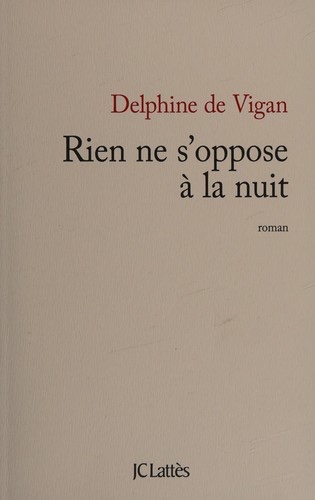
Cover of Rien ne s'oppose à la nuit

Rien ne s'oppose à la nuit

Delphine de Vigan

4 ideas

  1. Lucile Poirier: from child model to suicide

    Lucile was one of nine children in a large, charismatic Parisian family, the Poiriers, and worked as a child model. The family was marked by the accidental deaths and suicides of several of her brothers and by her later accusation that her father had sexually abused her. She developed bipolar illness, had a severe psychotic breakdown in 1980 while raising two daughters, and killed herself in her apartment in January 2008, aged 61, where her daughter Delphine found her body.

  2. Reconstructing a real person produces fiction

    When a writer rebuilds a dead parent's life from interviews, recorded tapes, letters and photographs, the sources contradict one another, and each relative defends their own version. The writer must choose, order and fill silences, so the result is a constructed character rather than the person. Writing about someone does not recover them; it replaces them with a version the writer can bear.

  3. Joyful family myth masking hidden damage

    A large, lively family can build a shared legend of warmth, eccentricity and fun that its members keep repeating. That same legend works as a gag: the members who carry the damage, including abuse, grief and madness, cannot speak of it without seeming to betray everyone else. Reading family lore as something that protects the group rather than records what happened shows who paid for the story.

  4. The writer's guilt of family exposure

    Writing about one's own family turns relatives into material without their consent. Surviving relatives may be hurt by what is disclosed or feel their version was overruled. The author has to write alongside, and about, the fear of being judged, the doubt over her right to tell the story, and the risk of reopening wounds, so the ethics of disclosure become part of the text itself.

Save and mark ideas in the app