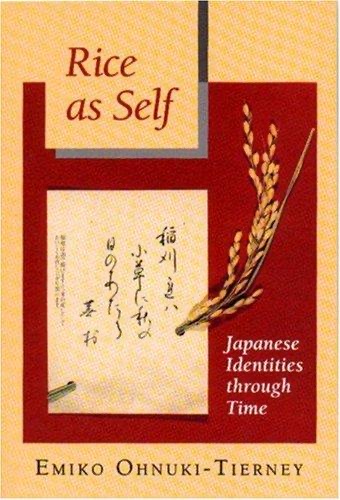
Cover of Rice as Self

Rice as Self

Emiko Ohnuki-Tierney

5 ideas

  1. Agrarian identity was constructed, not inherited

    The image of Japan as a nation of rice-eating farmers is a historical construction: for much of Japanese history most people ate millet, barley, or other grains, and rice was a scarce food for elites and ritual. Rice became the symbol of the collective self because ruling groups elevated it, not because it reflected how most people lived.

  2. The self is defined against shifting others

    A collective self forms through contrast with a salient other, and when the other changes, the symbol is redeployed. Japanese rice first marked difference from China's continental culture, then Japanese short-grain rice was set against Western meat and bread. The symbol's content adapts to whichever other is most threatening at the time.

  3. Rice as deity, soul, and gift

    In agrarian cosmology rice held a soul and was treated as a divine gift, so exchanging and offering it created bonds between humans and deities and among humans. Imperial harvest rituals such as the Niinamesai and Daijōsai tied the emperor's sacred role to presenting new rice to the gods, fusing rice, sovereignty, and the renewal of the community.

  4. Paddies as the nation's land and nature

    Rice paddies came to represent Japanese space and a cultivated, harmonious nature, so the paddy landscape stands for the homeland and for the ancestors who worked it. Because of this, farmland carries meaning as national territory and heritage beyond its economic output.

  5. Symbolic polysemy sustains costly protectionism

    Rice carries many meanings at once, including purity, ancestors, land, wealth, and national self, so it can hold public support even as farmers become a small share of the population and rice becomes a smaller share of the diet. This layered symbolic load, and not only farm-lobby politics, explains why Japanese people accept paying far above world prices to keep rice production domestic.

Save and mark ideas in the app