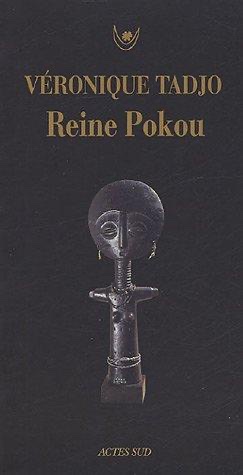
Cover of Reine Pokou

Reine Pokou

Véronique Tadjo

4 ideas

  1. Abraha Pokou sacrifices her son at Comoé

    In the Baoulé founding legend, the Ashanti princess Abraha Pokou flees a succession war in the eighteenth century with her followers and reaches the flooded Comoé river with enemies behind them. A diviner declares that the river demands the most precious child, so Pokou throws her infant son into the water, and the river opens a crossing. Her lament 'ba ou li' ('the child is dead') is said to have become the people's name, Baoulé.

  2. Retelling a myth repeatedly to test it

    Tadjo tells the same founding story several times, and each version changes one assumption: whether the mother consents, what she wants, or what happens to the child. Each variant exposes a choice the canonical version presents as inevitable. The myth stops working as a fixed moral and becomes a set of alternatives the reader must weigh.

  3. Glorified sacrifice myths license present violence

    A founding legend that honors a leader for giving up a child to save the collective teaches that innocent lives are an acceptable price for political survival. Set against the Ivorian civil conflict, the book treats that inherited template as a live danger that can be reused to justify sending the young to die for power. On this reading, questioning the myth is a political act and not only a literary one.

  4. Ask who pays for the founding

    Read an origin story by asking whose loss it is built on rather than whose heroism it celebrates. The Baoulé take their name from the death of the child, yet the legend centers the queen's greatness and the people's rescue. Moving attention to the victim who had no say turns a triumphant national story into a question about consent and the cost of power.

Save and mark ideas in the app