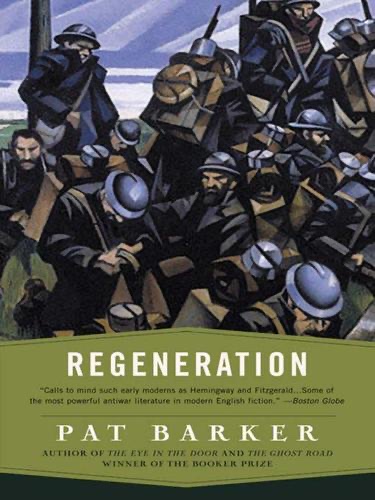
Cover of Regeneration

Regeneration

Pat Barker

4 ideas

  1. Sassoon's protest rebranded as shell shock

    In 1917 Siegfried Sassoon published a statement refusing to keep fighting a war he believed was being needlessly prolonged. Instead of court-martialling a decorated hero, the Army, helped by Robert Graves, declared him shell-shocked and sent him to Craiglockhart, where Rivers had to treat a man who was not ill. Sassoon ends up choosing to return to the front out of loyalty to his men, and Rivers's 'cure' is the quiet dissolving of a political protest.

  2. Healing soldiers serves the machine that broke them

    A military doctor's success is measured by how many patients he makes fit to return to the conditions that caused their breakdown. Rivers's compassion and clinical skill therefore work directly for the war, and the better he treats a man the more reliably he delivers him back to danger. The novel treats this as a structural complicity that personal decency cannot resolve.

  3. Shell shock as suppressed emotion, not cowardice

    Officers are trained to hold back fear and grief, and that suppression, together with the helplessness of trench warfare, produces symptoms like mutism, stammering and nightmares. Rivers's 'talking cure' asks men to face their memories and feel them instead of pushing them away. This recasts breakdown as a normal response to impossible conditions, not a failure of character or manliness.

  4. Coercive cure versus consensual cure

    The novel sets Rivers's slow, patient-led method against Dr Yealland's electric-shock treatment, which forces mute soldiers to speak by making silence more painful than speech. Both methods restore men to duty. Rivers comes to see that they differ in how much they respect the patient, not in what they are for. By controlling the patient's voice, Yealland's approach exposes the silencing logic that both cures share.

Save and mark ideas in the app