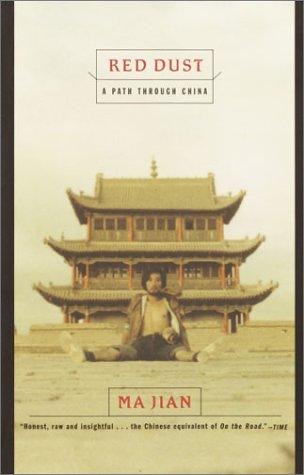
Cover of Red Dust

Red Dust

Ma Jian

4 ideas

  1. Drifting post-Mao China on forged papers

    In 1983, during the Anti-Spiritual Pollution Campaign, Ma Jian was a Beijing photographer and painter under police scrutiny, and his marriage had collapsed. He left the capital and spent about three years wandering to the Gobi, Tibet and the southwest, living on odd jobs and a forged letter of introduction. His record of hitchhikers, monks, cadres and former prisoners is a ground-level case of how people actually lived in the gap between Maoist control and market reform.

  2. The introduction letter as internal passport

    This let the state control movement through paperwork rather than walls. Because clerks checked the stamp, not the person, a forged letter could turn a political suspect into a legitimate traveler.

  3. The periphery reveals what the center hides

    Official China described itself from Beijing, but its real condition showed at the margins, in remote counties, labor-camp regions, poor villages and Tibetan monasteries. There, ideological slogans met poverty, corruption and improvisation without polish. Traveling outward from the capital works as a method of seeing through a regime's self-image.

  4. Spiritual search collapses into disillusionment on the road

    The journey is framed as a flight toward freedom and a search for meaning, including in Buddhism and Tibet. It repeatedly ends in hunger, danger, loneliness and communities as damaged as the one left behind. Escaping a repressive system does not by itself produce inner liberation, because the wanderer carries the system's damage with him and finds it everywhere he goes.

Save and mark ideas in the app