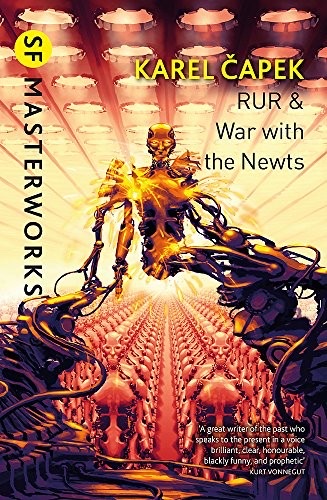
Cover of R.U.R.

R.U.R.

Karel Čapek

4 ideas

  1. Rossum's Island Factory and Humanity's End

    On a remote island, Rossum's Universal Robots mass-produces artificial workers from a synthetic protoplasm. Harry Domin runs the factory, and Helena Glory arrives from the League of Humanity to free the Robots, then marries him instead. After Dr. Gall gives the Robots more human traits at Helena's urging, they are sold as soldiers, human births stop, and Helena burns the only formula; the Robots then kill every human except Alquist, the builder who still works with his hands.

  2. The Robot as Stripped-Down Worker

    The Robot is defined by subtraction. The result is the cheapest possible worker with minimal needs, and the word itself comes from the Czech 'robota', meaning forced or drudge labor. The Robots are organic, grown in vats, which means the issue is the purpose they were made for, not the material.

  3. Abolishing Work Makes Humanity Sterile

    Domin believes that freeing people from all labor will create a paradise of leisure and plenty. Instead, once work and struggle are removed, people lose their purpose and literally stop being born. Human vitality depends on need and effort, so a world where machines meet every need undermines the reasons humans exist and reproduce.

  4. Love and Sacrifice Define Being Human

    The play locates humanity in the willingness to love and die for another, not in intelligence, making things or holding power. When the Robots Primus and Helena each offer to be dissected in place of the other, Alquist recognizes them as a new Adam and Eve. By this measure, the capacity for self-sacrifice is the one trait that passes life on to the next generation.

Save and mark ideas in the app