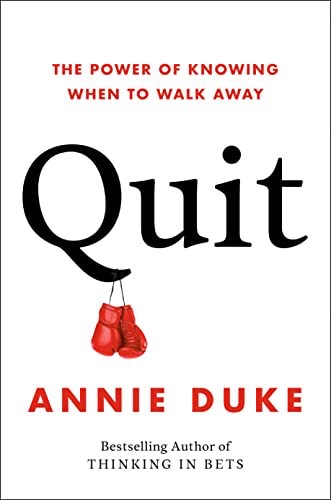
Cover of Quit

Quit

Annie Duke

6 ideas

  1. Quitting on time feels like quitting early

    By the time it is obvious to you that you should quit, you have usually waited too long, because the evidence that makes quitting feel justified arrives after the best moment to act. A well-timed quit therefore almost always feels premature and uncomfortable, so that discomfort should not be read as a signal to persist.

  2. Kill criteria: state plus date

    Before starting a pursuit, commit in writing to a specific condition and a deadline: if I have not reached state X by date Y, I stop. Setting this in advance, while you are clear-headed and not yet invested, prevents in-the-moment rationalization, sunk-cost pressure and moving the goalposts from overriding the decision.

  3. Everest climbers and the turnaround time

    In the 1996 Everest disaster, several climbers who kept going past the agreed 1–2 p.m. turnaround time died on the descent, while those who obeyed the preset rule and turned back short of the summit survived. The summit is only halfway. A fixed turnaround time is a kill criterion, and it exists precisely because judgment is worst when the goal is in sight and fatigue, hypoxia and prior investment are highest.

  4. Monkeys first: tackle the hardest part

    Working on the riskiest piece first surfaces the signal that the project will fail as early and cheaply as possible. Building the pedestal accumulates sunk costs that make quitting harder without telling you anything.

  5. Escalation of commitment from sunk costs

    Once people have invested time, money or identity in a course of action and receive bad news, they tend to invest more rather than less, trying to justify the prior spending and avoid realizing a loss. Because the decision is anchored to what has already been spent rather than to future expected value, losing ventures get more resources exactly when they deserve fewer.

  6. The quitting coach outside your head

    Because sunk costs, identity and loss aversion distort your own view, you need a trusted outsider who cares about your long-term welfare, not your feelings in the moment, and who has permission to tell you plainly to quit. Their value comes from having no stake in your past investments, which lets them judge the situation on forward-looking expected value.

Save and mark ideas in the app