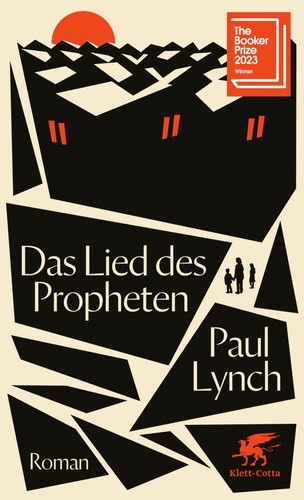
Cover of Prophet Song

Prophet Song

Paul Lynch

4 ideas

  1. Eilish Stack's delayed flight from Dublin

    Eilish Stack, a Dublin microbiologist and mother of four, watches the secret police of Ireland's new National Alliance government detain her husband Larry, a teachers' union official, under emergency powers. He vanishes, her eldest son Mark flees conscription to join the rebels, and her son Bailey is later killed amid the fighting.

  2. Totalitarianism arrives through incremental normalization, not rupture

    Authoritarian takeover in a stable democracy proceeds through small, individually deniable steps: a new police unit, an emergency law, a disappeared unionist, a rigged court. Each step is absorbed as an exception, so citizens keep recalibrating what counts as normal until the exits have closed. By the time the whole shape of the collapse is visible, the chance to act on it has already passed.

  3. Denial as a rational defense of ordinary life

    People stay in collapsing states less from ignorance than from the weight of what leaving costs: jobs, a home, a father with dementia, children's schools, a missing husband who might return. Staying is a sequence of reasonable-seeming bets that things will revert. Viewed this way, the failure to flee is a structural trap produced by attachment and hope, not stupidity.

  4. Refugee experience relocated to a familiar Western home

    The novel transplants the mechanics of state collapse, disappearance, conscription and flight by sea onto middle-class Dublin, so readers experience as their own what they usually see as distant news. The claim built into the form is that no society is exempt, and that the difference between citizen and refugee is circumstance. The unbroken, paragraphless prose enacts the claustrophobia of having no pause or exit.

Save and mark ideas in the app