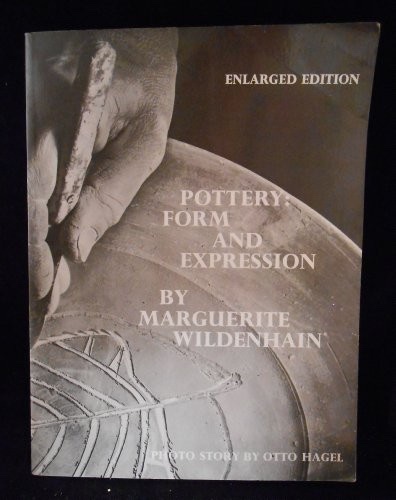
Cover of Pottery: Form and Expression

Pottery: Form and Expression

Marguerite Wildenhain

6 ideas

  1. Skill must precede any attempt at expression

    Personal expression in clay is only possible once the hands have mastered the craft so thoroughly that technique no longer demands conscious attention. A beginner who reaches for originality before this point produces novelty, not form, because they lack the control to realize what they intend.

  2. Repetition exercises as training for hand and eye

    The student throws the same basic cylinder or bowl shape hundreds of times, then cuts each piece in half to inspect wall thickness and profile. Each repetition trains the hands' control and the eye's judgment of proportion together, building an internal standard that no written rule could supply.

  3. Form as a unified living whole

    A true pot is not a sum of parts such as foot, belly, neck, and lip. It is one continuous form in which every curve and transition follows from the others, so a single weak line undermines the whole. The potter judges work by whether it holds this inner tension and unity, not by surface decoration.

  4. Apprenticeship transmits what instruction cannot

    The workshop apprenticeship lasts years because standards, rhythms of work, and judgment pass from master to student through daily side-by-side labor and correction. Short courses give information but cannot build the slow, embodied discrimination that makes a craftsman.

  5. The work reveals the whole person

    Wildenhain treats a pot as an honest record of the maker's character, attention, and way of living. Carelessness, vanity, or haste in a life appears in the form regardless of technical skill. Improving the work therefore requires cultivating the person: their observation, their discipline, and their seriousness.

  6. Building Pond Farm as a working life

    After fleeing Nazi Europe, Wildenhain settled at Pond Farm in northern California. There she built a workshop and summer school where potting, teaching, growing food, and simple rural living formed one integrated discipline. The farm demonstrated her belief that a potter must deliberately construct an entire life around the work, rather than fitting craft into the gaps of an ordinary life.

Save and mark ideas in the app