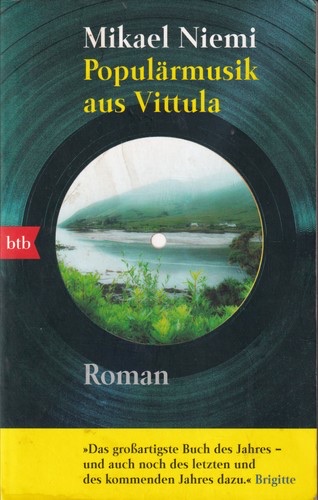
Cover of Populärmusik från Vittula

Populärmusik från Vittula

Mikael Niemi

4 ideas

  1. A Beatles single breaks Pajala open

    In 1960s Pajala, on the Finnish border, Matti and his near-mute friend Niila grow up in a home world ruled by strict Laestadian piety, where music and worldly pleasure count as sin. Hearing a Beatles record ("Rock and Roll Music") hits them like a revelation: they mime playing on improvised instruments, then form a clumsy garage band. The episode shows how a single piece of imported mass culture can give isolated kids a way out of an inherited world before they have any real skill or means.

  2. Knapsu: the policing of unmanly behavior

    In Tornedalen, "knapsu" labels any act coded as unmanly, such as housework, visible tenderness, fussiness or artistic sensitivity, and so marks the man who does it as not a real man. Boys learn the category by being mocked, not by being taught a rule. It works as an unwritten social tax that limits which interests and emotions men can show in public.

  3. Borderland people feel they belong nowhere

    The Finnish-speaking Tornedalians speak a dialect that is neither proper Swedish nor proper Finnish, so Swedes look down on them as backward Finns and Finns hear them as speaking broken Finnish. This double exclusion leaves a feeling of being culturally nobody, a sense of lacking a legitimate language and history of one's own. That missing identity is what makes imported pop culture so powerful: it offers a belonging not tied to either nation.

  4. Treating the grotesque as ordinary local truth

    The book tells drinking contests, sauna endurance duels, fights and supernatural episodes in the same flat, matter-of-fact voice it uses for everyday life. It treats exaggeration and myth as the honest way a community remembers itself. Seen this way, a region's tall tales are not distortions but records of its real values: endurance, stubbornness, male rivalry and pride in hardship.

Save and mark ideas in the app