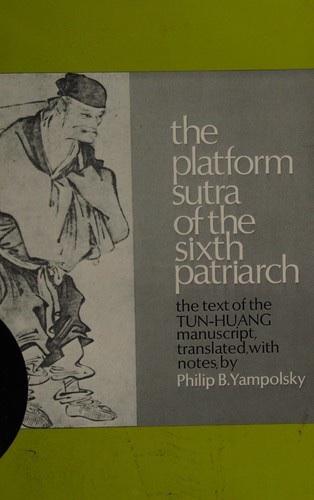
Cover of Platform Sutra

Platform Sutra

Huineng

6 ideas

  1. The mind-verse contest at Huangmei

    The Fifth Patriarch asks his monks to write verses showing their understanding. Shenxiu, the head monk, writes that the mind is a bright mirror stand that must be wiped constantly so no dust collects. Huineng, an illiterate kitchen worker, has a reply written for him: there is no mirror stand, and since nothing exists from the start, there is nowhere for dust to land. He receives the robe and the Dharma in secret, which shows that insight is not tied to rank, learning, or seniority.

  2. Awakening is sudden, not gradual accumulation

    Seeing one's own nature happens all at once. It is not the end result of slowly removing defilements, because the nature being seen was never covered in a way that polishing could fix. Differences between practitioners come from sharp or dull faculties, not from the truth being layered.

  3. No-thought as non-attachment within thinking

    No-thought does not mean making the mind blank. It means thinking without being carried along by thoughts, so that experience is met without the mind fixing on it or abiding in it. Suppressing all thought is its own attachment and deadens the mind. The goal is thoughts that pass without leaving a clinging residue.

  4. Self-nature is inherently pure and complete

    Buddha-nature is already fully present in every person, whether wise or deluded, northern or southern, learned or not. Delusion does not damage it. Delusion is like clouds covering a sun that keeps shining. Practice therefore reveals something already there rather than producing something new.

  5. Meditation and wisdom as lamp and light

    Concentration (samadhi) and wisdom (prajna) are one substance, not two stages. When concentration is present, wisdom is already in it, and when wisdom is present, concentration is already in it, the way a lamp and its light cannot be separated. Treating them as sequential, with calm first and insight afterward, creates a false split and leads practitioners to argue over which comes first instead of practicing.

  6. Merit-making versus seeing one's nature

    When Emperor Wu asks what merit he gained from building temples and funding monks, the answer is none. Outward good works bring fortune and blessings, while real merit is seeing one's own nature and treating others with humility. This lens separates what you do for reward from how your mind actually changes, so that visible piety can be recognized as a subtle form of attachment.

Save and mark ideas in the app