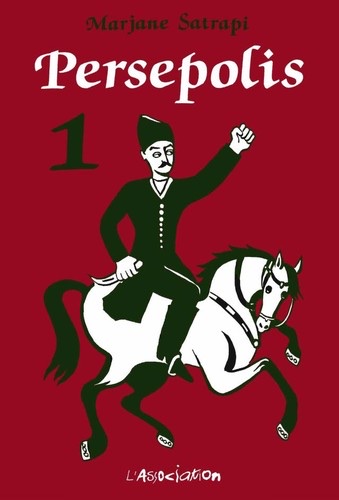
Cover of Persepolis

Persepolis

Marjane Satrapi

4 ideas

  1. Uncle Anoosh and the bread swan

    The new Islamic regime arrests him as a 'Russian spy' and executes him. His last visitor is his young niece, to whom he gives a swan carved from prison bread, and she responds by rejecting God, whom she had imagined as her protector.

  2. Plastic keys to paradise for boy soldiers

    During the Iran-Iraq War, the regime gave poor teenage boys gold-painted plastic keys and told them the keys would open the gates of paradise if they died as martyrs. The boys were then sent to walk across minefields to clear them for the troops behind. Meanwhile, middle-class teenagers like Marji went to underground parties, which shows how class decided who was offered up for sacrifice.

  3. Policing trivia crowds out political thought

    Under the Islamic Republic, strict rules on veils, makeup, and trouser width kept citizens in constant low-grade fear over small infractions. Satrapi argues this is the point: someone worried whether a strand of hair is showing no longer asks where their freedom of thought and speech went. As a result, private life becomes a double life, where parties, alcohol, and Western music behind closed doors serve as both escape and quiet resistance.

  4. Exile's double foreignness

    In Vienna, teenage Marji is treated as an exotic Iranian and ends up denying her origins, which leaves her ashamed. When she returns to Tehran, her family and friends see her as Westernized, and she cannot share the war trauma they lived through. The emigrant does not end up with two homes but with none, because each culture sees her as belonging to the other.

Save and mark ideas in the app