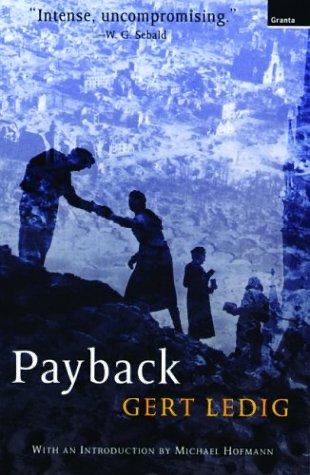
Cover of Payback

Payback

Gert Ledig

4 ideas

  1. Seventy minutes of one raid

    The novel tracks a single Allied daylight bombing raid on an unnamed German city in 1944, lasting about seventy minutes. It cuts among a flak battery crewed by teenage auxiliaries, civilians trapped in cellars and bunkers, soldiers, and an American airman who bails out into the burning city below. Chapters open with short first-person life summaries of people who will die in the raid, so each is given a biography only at the moment it ends.

  2. Retaliation as a self-perpetuating loop

    The title "Payback" works as an accusation, not a justification. The raid is framed as payback for earlier German violence, and it in turn provokes new acts of revenge on the ground, including violence against the downed airman. Each act of retaliation creates the grievance that licenses the next, so the logic of payback never reaches a point of settlement, only escalation.

  3. Collapse of role into shared victimhood

    Under saturation bombing, the categories of attacker, defender and bystander dissolve. The airman becomes prey once he lands, the schoolboy gunners are both combatants and children, and civilians turn on each other. Seen this way, sustained mass violence destroys the positions from which moral judgment is usually made, rather than sorting people into guilty and innocent.

  4. Unassimilable testimony gets socially suppressed

    The novel refuses heroism, explanation and consolation, and renders atrocity in flat, fragmented, unredemptive prose. Accounts like this give a traumatized society no usable meaning to take from its suffering, so that society ignores them. The book found almost no readers on publication and was recovered only decades later. Collective silence about a catastrophe can therefore be maintained less by censorship than by readers declining testimony that offers no story they can live with.

Save and mark ideas in the app