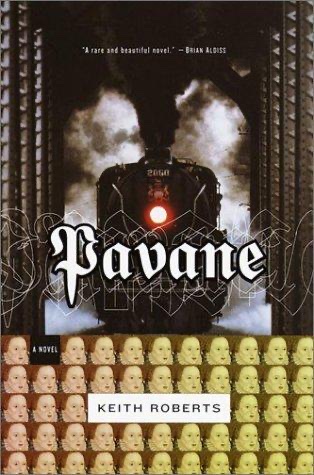
Cover of Pavane

Pavane

Keith Roberts

4 ideas

  1. Deliberate technological suppression as protective stewardship

    The closing Coda reveals that the Church's centuries of holding technology at steam and semaphore were deliberate, not simple backwardness. Its stated aim was to slow humanity's advance so the world could avoid the industrialised wars and weapons of mass destruction that unchecked progress produces. This recasts repression as a paternalistic bargain: an institution trades present freedom and comfort for the claimed avoidance of a future catastrophe that only it can foresee.

  2. Brother John: witness turned rebel

    Brother John, a monk and skilled artist, is sent to make drawings of the Inquisition's interrogations of heretics. Seeing the torture breaks his mind, and he begins preaching against the Church. His preaching ignites a peasant uprising, and the uprising is put down by force. The episode shows an institution creating its own opponent by forcing a loyal member to look directly at the violence it depends on.

  3. Guild-controlled communication as state infrastructure

    The country's messages travel by a chain of semaphore towers run by a closed, oath-bound Guild of Signallers with its own training and hierarchy. Whoever controls the channel controls how fast news, orders and alarms can move, so the communication network works as an arm of power rather than a neutral utility.

  4. Alternate history through working lives

    The book renders its divergent world mainly through ordinary workers rather than through kings and popes: a road-train haulier, a signaller, a monk, a fisher girl. Large historical forces such as the Church's grip, taxation, and technological limits show up as concrete limits on trade, love, travel and ambition. Seen this way, the grand political outcome matters most in the daily material constraints it places on people who never took part in the decision.

Save and mark ideas in the app