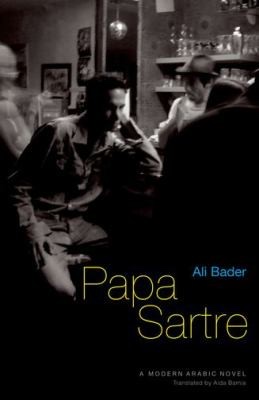
Cover of Papa Sartre

Papa Sartre

Ali Bader

4 ideas

  1. The self-appointed Sartre of Sadriya

    Abdul Rahman, a wealthy Baghdadi, returns from a short, shallow stay in Paris and remakes himself as the existentialist philosopher of the Sadriya quarter. The novel follows how this borrowed identity collapses into farce and personal ruin, a concrete case of an intellectual import performed as costume rather than thought.

  2. Philosophy as imported lifestyle costume

    When an ideology arrives without the historical conditions that produced it, adopters take up its visible signs, such as clothing, café rituals, jargon, and sexual arrangements, in place of its arguments. Displaying these signs becomes a way to claim status, so the philosophy works as social distinction rather than as a method of thinking. This hollowness is hard to see from inside, because the performers judge each other by how well they imitate.

  3. Biography as commissioned fabrication

    The narrator is paid to write the life, and his patrons have their own interests in the result, so the biography is shaped by money, patronage, and invention rather than by fact. Reading any life story this way means asking who paid for it and what myth it protects. The account says as much about its makers as about its subject.

  4. Satirizing past idols frees later generations

    The book implies that a culture cannot move forward while it treats its earlier intellectual heroes as sacred. Exposing the 1960s generation's self-mythologizing as vanity and imitation clears space for later writers to build an authentic voice rooted in their own experience. The target is not ideas as such but the unexamined reverence that turns borrowed ideas into inherited authority.

Save and mark ideas in the app