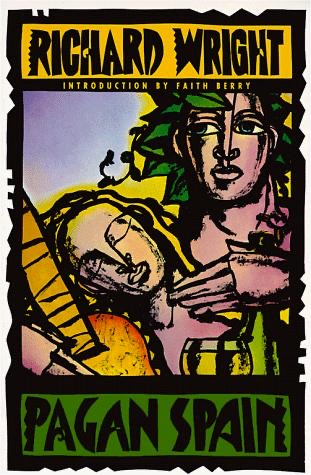
Cover of Pagan Spain

Pagan Spain

Richard Wright

4 ideas

  1. The Falangist catechism for young women

    In Franco's Spain in the mid-1950s, Wright obtains the official political catechism used by the Falange's women's section to instruct girls, and quotes it at length. In question-and-answer form, it fuses Catholic doctrine with loyalty to the Franco state, teaching that serving Spain, God, and the Caudillo are one duty. The episode shows how an authoritarian regime borrowed the Church's oldest teaching format to make obedience feel like faith rather than politics.

  2. Catholicism as a veneer over paganism

    Wright argues that Spain never passed through the Reformation and Enlightenment secularization that remade the rest of Western Europe. As a result, its Catholicism absorbed pre-Christian rites instead of replacing them: worship of the Virgin, Holy Week processions, and the cult of female purity work as fertility and blood rituals under Christian names. On this reading, Spain belongs outside the modern West, and its authoritarian politics grow out of that pre-rational religious soil.

  3. Bullfight as staged ritual sacrifice

    Wright reads the corrida as a religious ceremony rather than a sport. It is a public sacrifice in which the crowd watches the matador confront a beast that stands for death and the irrational, then kill it by a fixed liturgy. The ritual lets a community face terror and release it together, which gives the spectacle an emotional power that no aesthetic account of the bullfight explains.

  4. The doubly displaced outsider's vision

    As a Black American who was also a lapsed believer living in exile, Wright stood outside both Spain's faith and the West's view of itself. That double distance let him see oppression in Spain that its own people treated as natural. He recognized Spanish Protestants as a persecuted minority whose position echoed that of Black Americans, and he saw the hooded Holy Week penitents as figures resembling the Ku Klux Klan. Being marginal in two ways works here as a method: each outsider position exposes what the other takes for granted.

Save and mark ideas in the app