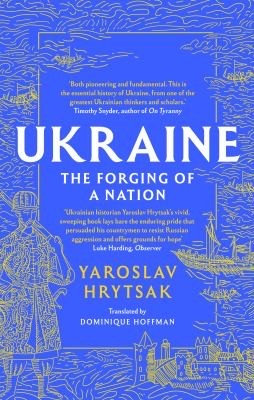
Cover of Overcoming the Past: A Global History of Ukraine

Overcoming the Past: A Global History of Ukraine

Yaroslav Hrytsak

6 ideas

  1. Writing national history from outside in

    Instead of tracing an unbroken national essence backward from the present, the historian starts from large global and European processes, such as the spread of Christianity, empire-building, the Reformation, industrialization and totalitarianism, and asks how each one reached and reshaped the Ukrainian lands. The nation then appears as a product of shifting external contexts and local responses rather than a timeless subject. This deflates both nationalist myths of uniqueness and imperial claims that the nation is artificial.

  2. Ukraine as a civilizational frontier zone

    Ukraine sits across the line dividing Western (Latin) from Eastern (Orthodox) Christianity, and later between Central European and Russian imperial spaces. This produced internal regional differences and a mixed political culture that no single empire fully absorbed.

  3. Poverty stems from extractive institutions, not destiny

    Ukraine's recurring poverty and violence are explained by institutions that concentrated power and resources in narrow elites. These include serfdom, imperial rule, Soviet collectivization and post-Soviet oligarchic capture, all of which gave most people little incentive or security to invest.

  4. Survival versus self-expression values shift

    Societies can be placed on a spectrum from survival values, which emphasize security, distrust and obedience, to self-expression values, which emphasize autonomy, tolerance and civic participation. As a generation grows up without Soviet scarcity and with more education and openness, the balance tips toward self-expression. The historian reads Ukraine's post-2004 protest movements as the political surfacing of this generational value change.

  5. Revolution of Dignity as civic nation-making

    The 2013–14 Euromaidan protests began over a rejected EU association agreement and grew into a mass revolt against corruption and state violence. Russian speakers, Ukrainian speakers, and people of different ethnic origins stood on the same side of the barricades. The episode shows a nation defining itself by shared political values and a European choice rather than by ethnicity or language.

  6. Pluralism kept Ukraine democratic when weak

    Because Ukraine's regions differed sharply in language, religion and historical memory, no single faction or region could dominate the post-1991 state. Rival elites had to compete and compromise, which blocked the consolidation of authoritarian rule seen in Russia and Belarus. Regional diversity that seemed a source of fragility thus worked as a structural check that preserved competitive politics.

Save and mark ideas in the app