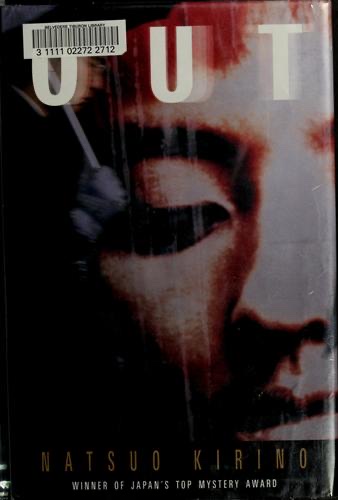
Cover of Out

Out

Kirino Natsuo

7 ideas

  1. Night-shift women dismember a gambler husband

    Yayoi Yamamoto, a young mother on the night shift at a Tokyo boxed-lunch factory, strangles her husband Kenji after he gambles away their savings on a hostess at a Kabukicho baccarat club and hits her. Kuniko dumps her share carelessly in a park, the remains are found, and the police investigation lands on the innocent club owner Satake, who loses everything and hunts Masako for revenge.

  2. Industrial labor discipline makes atrocity routine

    The women can dismember a man because the assembly line has already trained them to break work into repetitive, emotionless tasks done in sequence against the clock. The body becomes another batch of product to process, bag and distribute, and the moral horror dissolves into procedure. Work that has stripped workers of meaning also gives them the detached competence to do anything.

  3. Debt and precarity as the recruitment pipeline

    Each accomplice joins for a price her economic position sets: Yoshie because she cannot support a bedridden mother-in-law on factory wages, Kuniko because consumer loans have trapped her. A loan shark sees the same desperation and turns body disposal into a paid service. When legitimate work cannot cover basic obligations, crime is not a moral break but the next available job, and whoever holds your debt effectively owns your choices.

  4. Transgression as exit from invisible labor

    Masako is trapped between a silent family that ignores her and an exhausting factory job with no future. For her, crossing the moral line is less a fall than an escape: it proves she can act outside the roles of wife, mother and worker that have made her invisible. The novel presents the path 'out' of a closed social and economic system as running through violation, because every sanctioned exit has been foreclosed.

  5. Bento night shift dismembers a husband

    When parts surface in a park, suspicion falls on the casino owner Satake, whose business is ruined and who hunts Masako. Meanwhile the loan shark Jumonji, who holds Kuniko's debt, pulls Masako into disposing of more bodies for money.

  6. Consumer debt as the hidden plot engine

    Read the crime through the women's finances rather than their motives: small wages, husbands' gambling, credit-card spending and loan-shark interest decide who can refuse and who cannot. Once a woman owes more than she earns, her choices are made by whoever holds the debt, so the loan shark, not the murderer, sets the course of events.

  7. Crime as the exit from assigned roles

    For Masako, whose husband and son no longer speak to her and whose job offers no future, the dismemberment is less a burden than an opening: she discovers she is capable, calm, and free of the roles of wife, mother, and worker. The transgression works as a way 'out' because a system that makes women invisible also leaves them unwatched, and the one who is most competent at the crime is the one most emptied by the ordinary life around it.

Save and mark ideas in the app