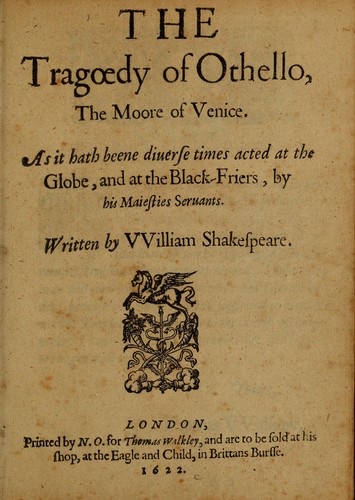
Cover of Othello

Othello

William Shakespeare

4 ideas

  1. Iago destroys Othello through a handkerchief

    Iago, passed over for promotion in favor of Cassio, convinces his general Othello that Desdemona is sleeping with Cassio, using insinuation, staged overheard conversations, and a handkerchief his wife Emilia picked up that Iago then planted on Cassio. Othello smothers Desdemona, learns from Emilia that the evidence was fabricated, and kills himself; Iago, exposed, refuses to explain: 'From this time forth I never will speak word.'

  2. Motiveless malignity behind rationalized motives

    Iago offers several reasons for his hatred: the lost promotion, a rumor that Othello slept with his wife, racial contempt. They are inconsistent and none is enough to explain what he does. Coleridge's phrase 'the motive-hunting of motiveless malignity' names the pattern: the reasons are produced after the fact to justify a malice that exists first.

  3. Manipulation works through the victim's own inferences

    Iago rarely asserts anything outright. He hesitates, hints ('I like not that'), and appears reluctant to speak, so that Othello builds the accusation himself and trusts it as his own conclusion. A manipulator who lets the target supply the story avoids being accountable for lies and makes the belief harder to dislodge, because refuting it would mean the victim doubting his own reasoning.

  4. Reputation for honesty is the manipulator's weapon

    Every character calls Iago 'honest Iago.' His plan depends on that trust: a known liar's hints would be dismissed, while a trusted man's reluctance reads as proof. The people with the greatest access to a victim's credulity are the ones the victim has already vetted, so a strong reputation for candor protects a deceiver instead of exposing him.

Save and mark ideas in the app